Alexa x Hardware • Concept 2025
Alexa Assist: The future of AI and Elder Care

Role
Product Designer
Timeline
December 2025
Tools
Perplexity
Nano Banana
Figma
Team
Solo Project
Overview
How might Amazon help older adults live safely and independently with an AI wearable?
As a solo product designer, the goal of this project was to define a clear vision for Alexa Assist, an elder‑care wearable and companion app that connects older adults and their caregivers within the Alexa ecosystem.
Product Strategy
Extending Alexa from the home into on‑body hardware, focusing on elder care, safety, and caregiver peace of mind.
Prototyping & Testing
Prototyping hardware, interfaces through quick 3D explorations and clickable app prototypes with older adults and caregivers.
Iterating with Feedback
Evolving through continuous feedback loops from older adults, caregivers, and clinicians as the product matures.
Problem
How might Alexa bridge the gap between home devices and personal safety for older adults?
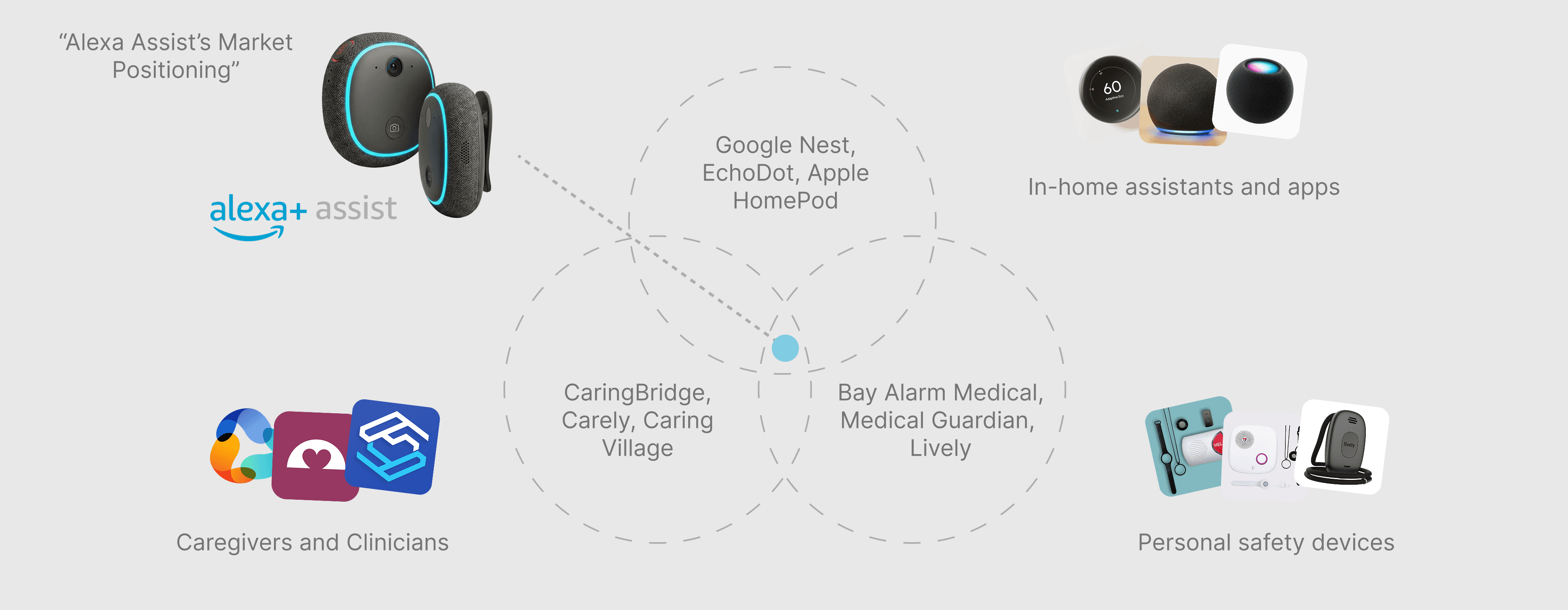
Older adults want to stay in their own homes, but today’s tools focus on emergencies rather than everyday living. The current stack spans personal safety devices, in‑home assistants, and human caregivers, but there is a gap in the middle.
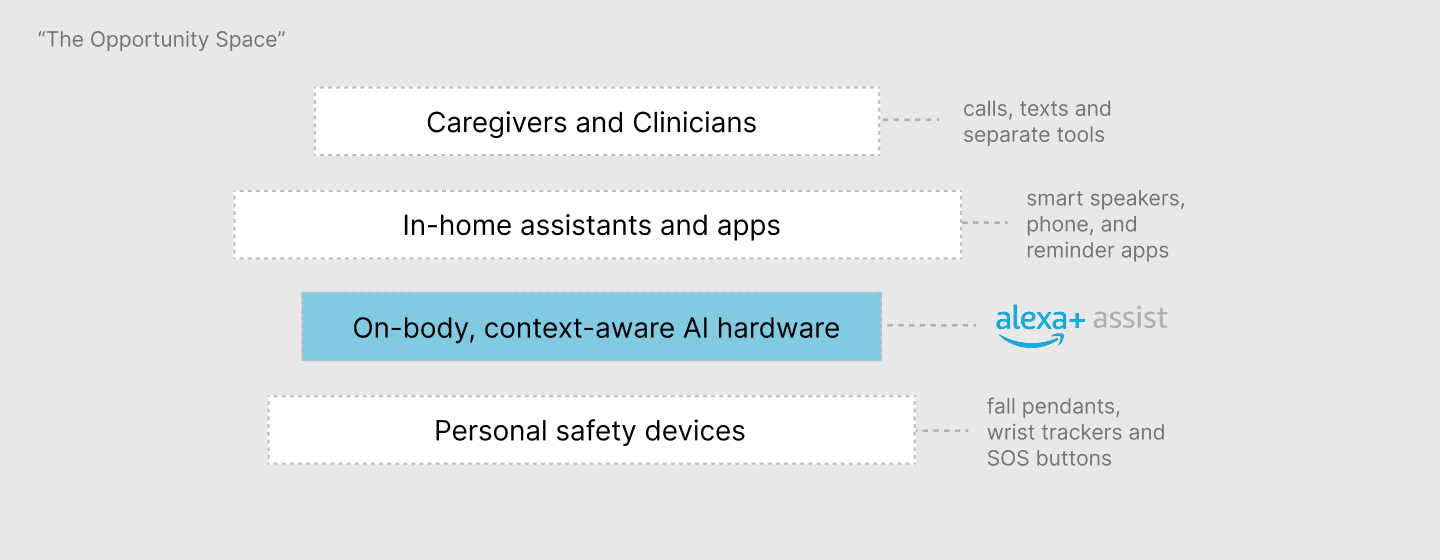
Safety devices know when something has gone wrong; smart speakers know what is said at home; caregivers know only what they are told.
Solution
Meet Alexa Assist, a trustworthy, longitudinal companion of an older adult's life.
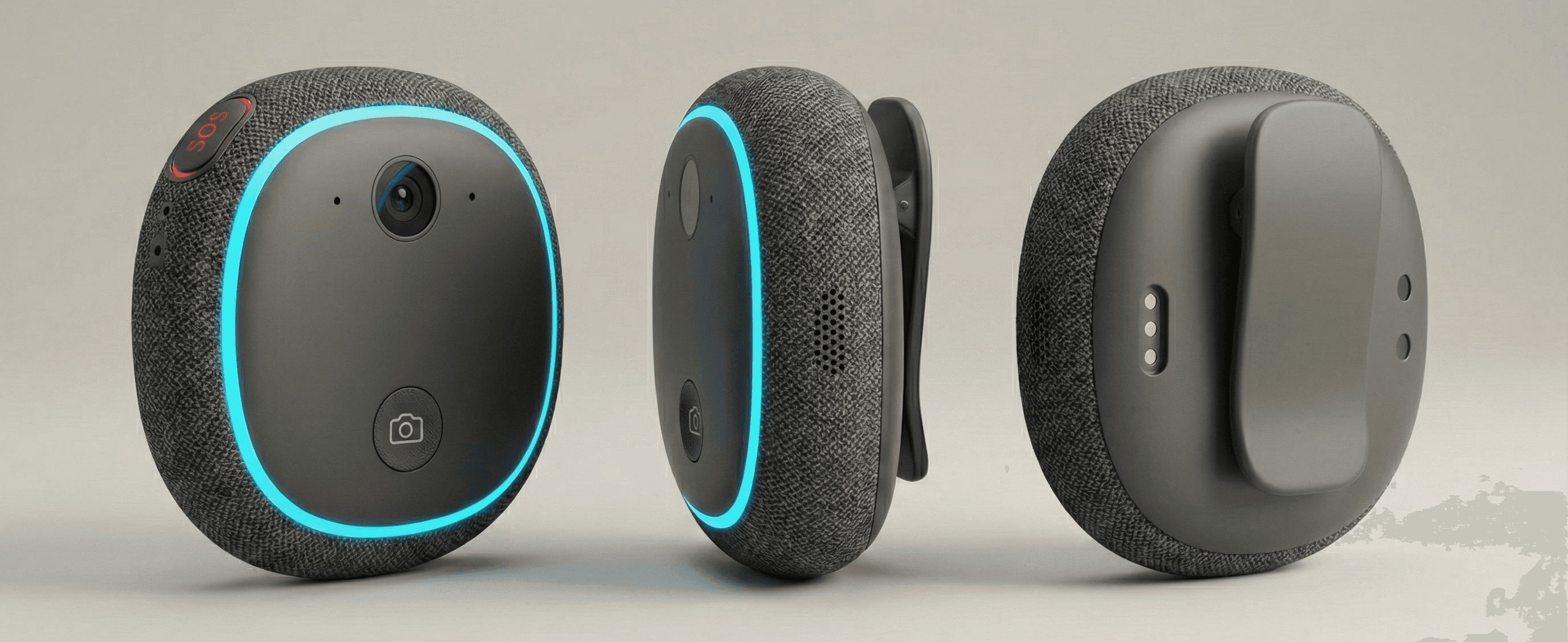
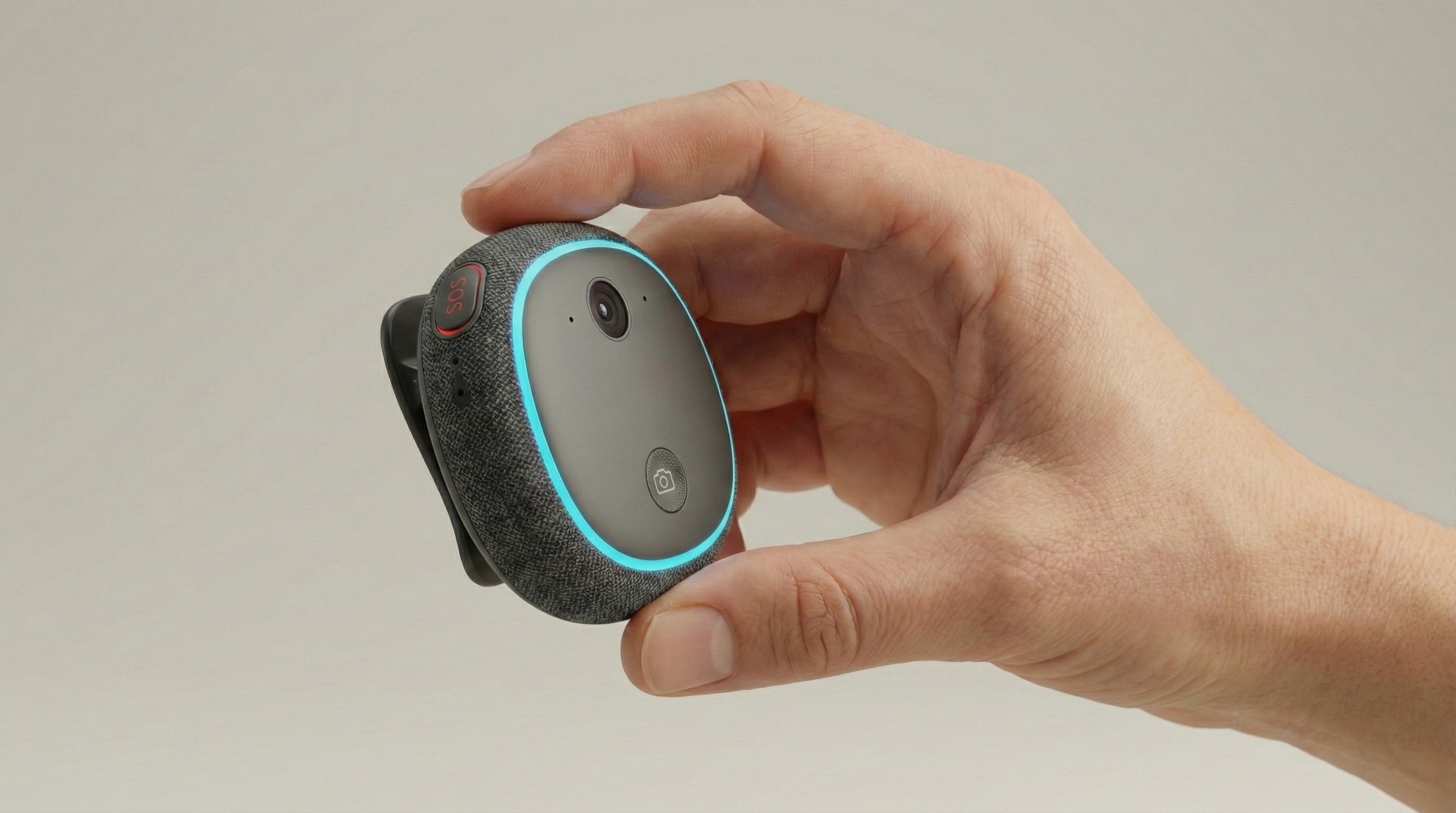
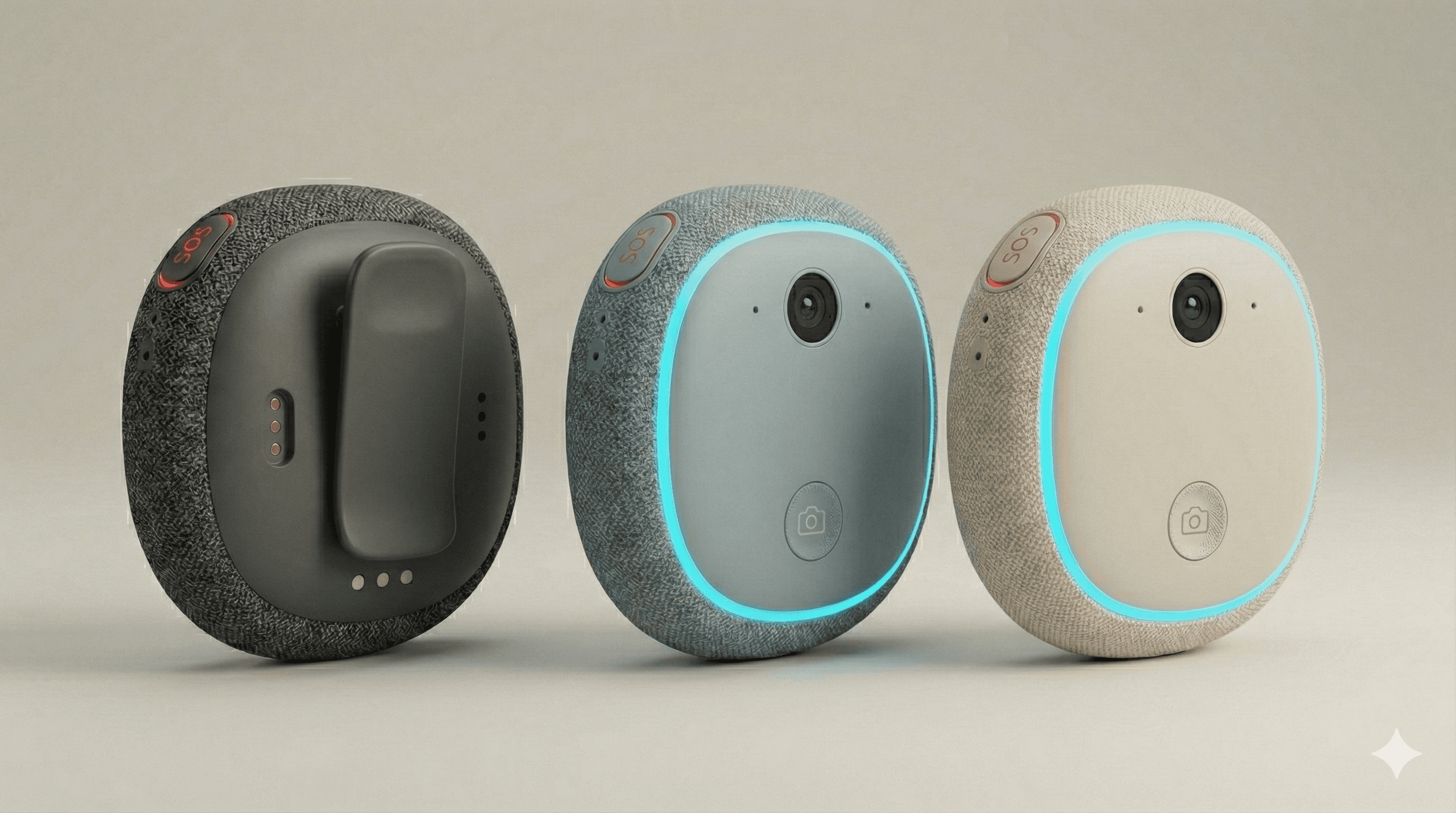
Alexa Assist Clip is a soft‑edged, on‑body sensor with a wide‑angle camera, dual microphones, LED light ring, fall‑detection IMU, and dedicated SOS button, wrapped in Echo‑style fabric for familiarity and comfort.
Designed to be worn as a clip, it is integrated with Bluetooth/Wi‑Fi, and an all‑day battery work together to stream contextual captures, activity signals, and device health into the Alexa ecosystem.
Research: Market Analysis
Mapping Alexa Assist's place in the ecosystem.
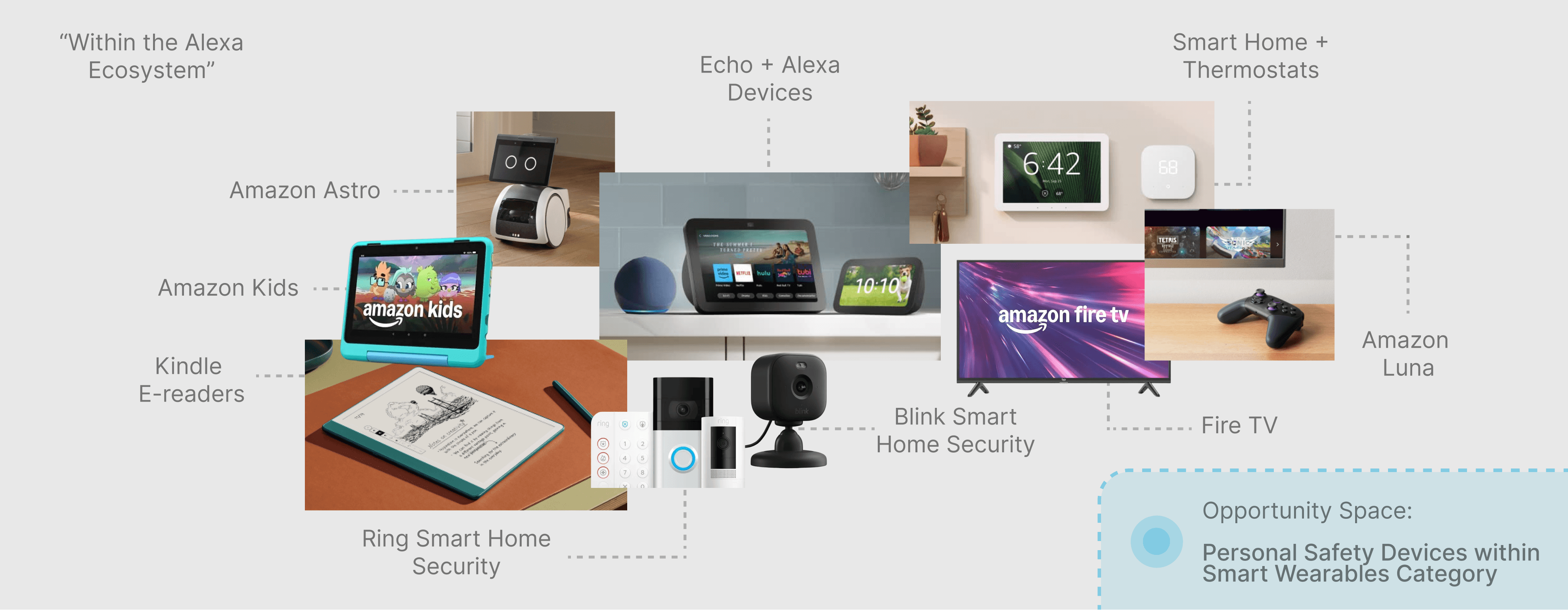
Alexa Assist sits at the overlap of caregiver apps, in‑home assistants, and personal safety devices, rather than in any single category. In Amazon's internal portfolio, there is an opportunity space positioning Alexa Assist alongside Echo, Ring, Fire TV, and other flagship devices.
Physical-Digital Link
From chest-worn sensor to caregiver-ready insights.
On the body, Alexa Assist listens, observes, and timestamps the small events that rarely make it into a chart. In the app, those events resolve into clear moments, summaries, and alerts that caregivers can scan in seconds.


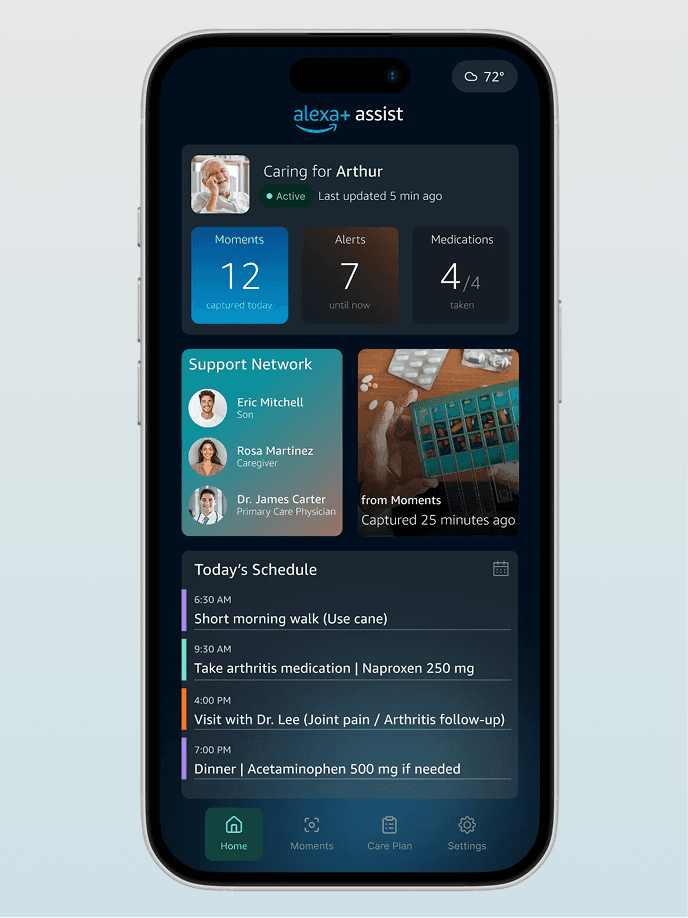
Arthur's day at a glance
This home view turns a stream of sensor data and check‑ins into a calm, narrative overview of Arthur’s day. The top tiles summarize what the wearable has captured: Moments, Alerts, and Medications.
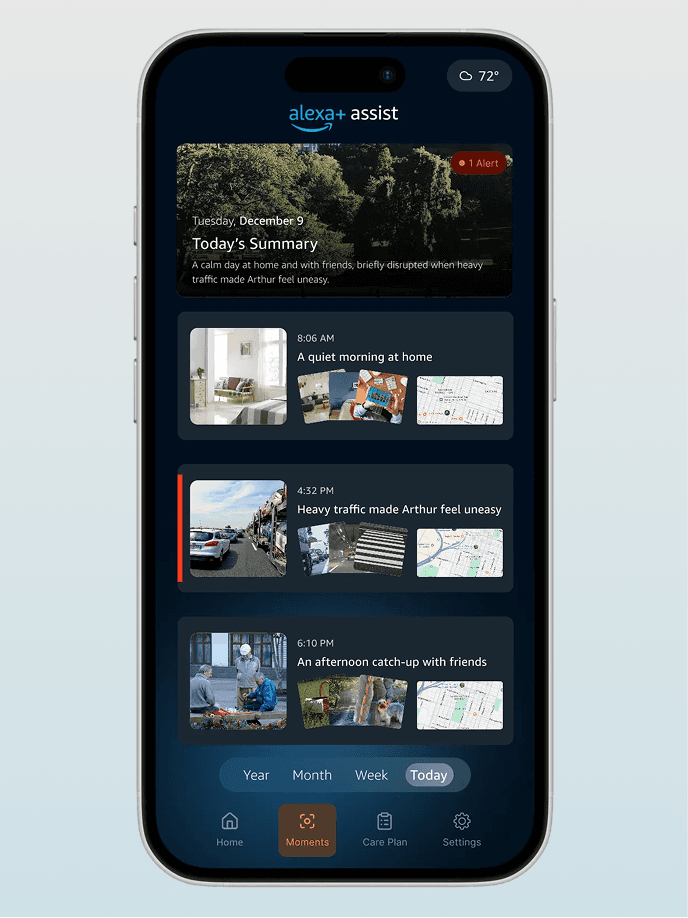
A chronological timeline for every day
The moments screen is where the physical–digital link becomes tangible.
Each row compresses multiple data sources: Imagery, time, environment into a compact card that can be grasped at a glance.
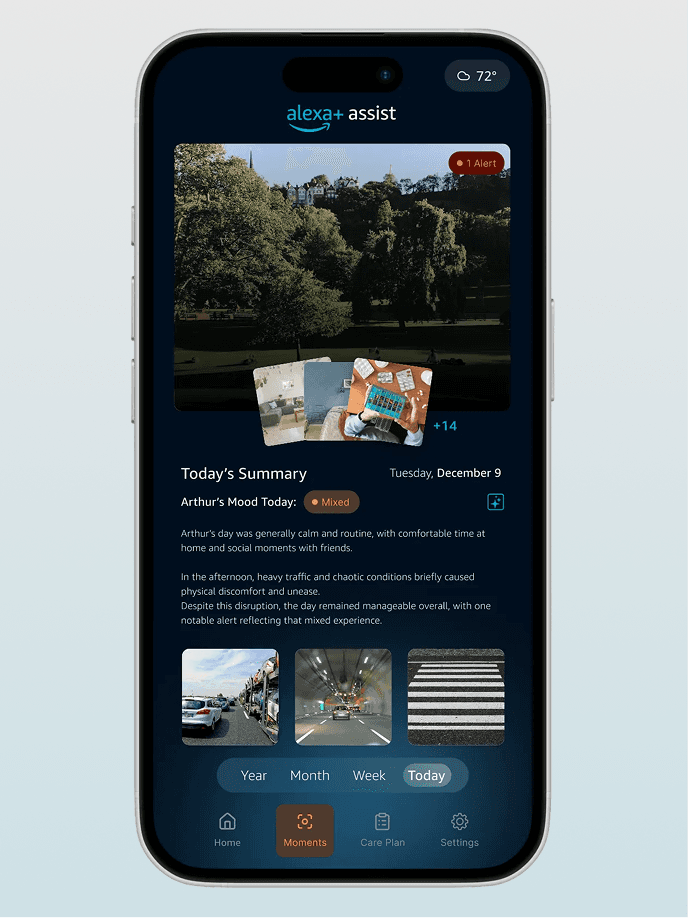
Day becoming a digestible brief
The day resolves into a summary view that caregivers can actually read and act on: Arthur’s mood, key moments, and any alerts are woven into a simple narrative.
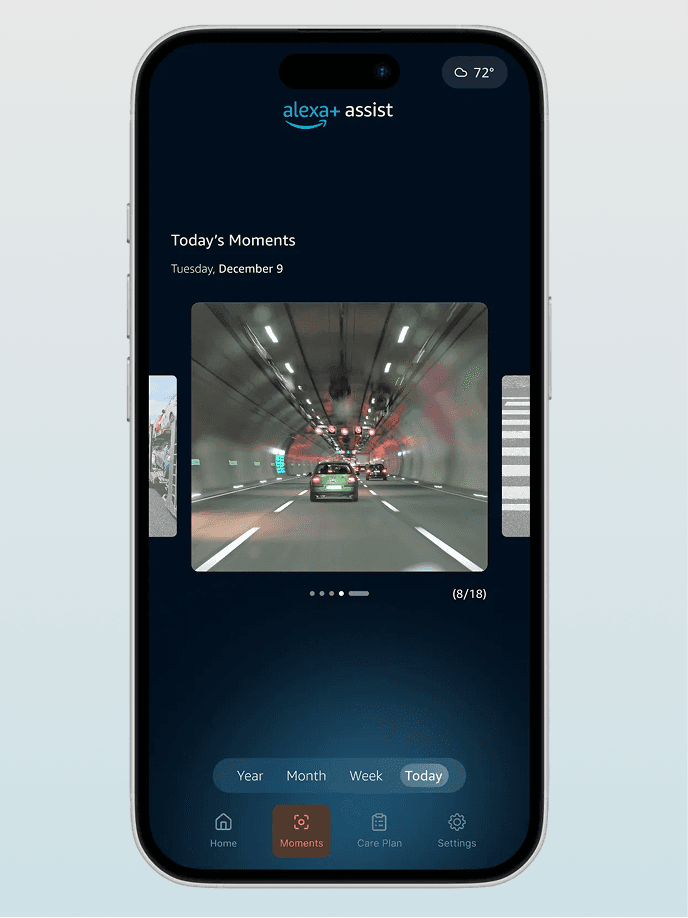
Zeroing in on the most important moments
This design makes the physical‑digital link feel intentional: what the wearable recorded in real time is replayed here in a way that is easy to inspect, rewind, and compare.
Ethical Considerations
The cost of context-aware care.
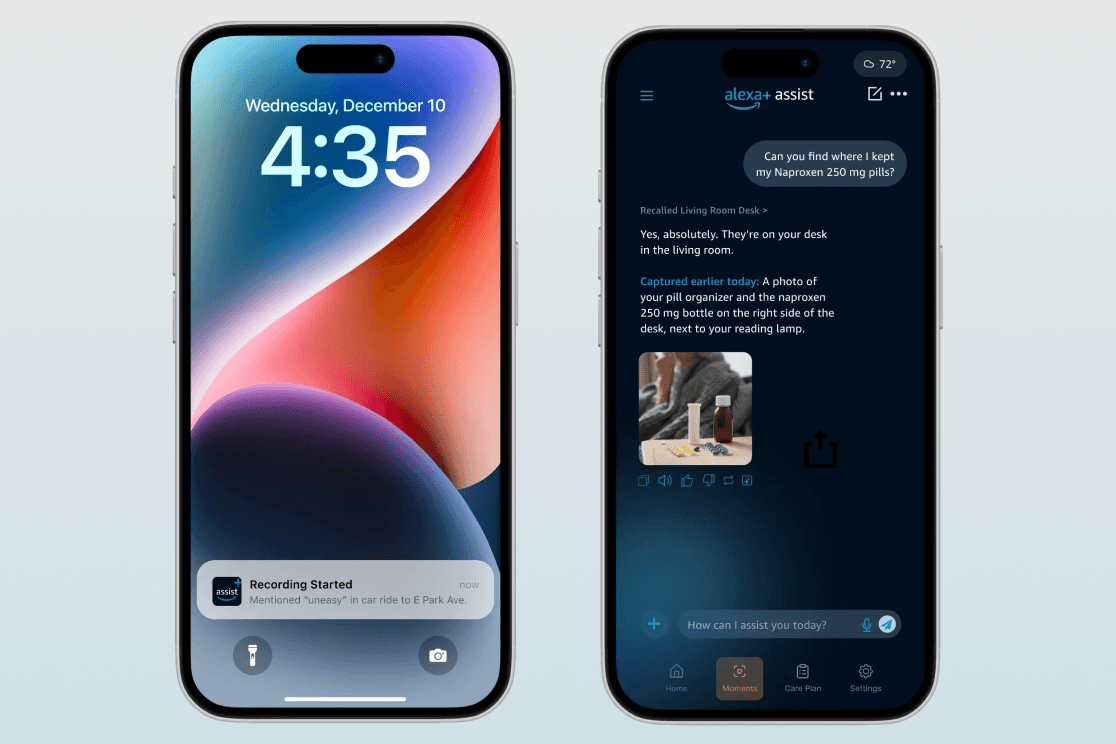
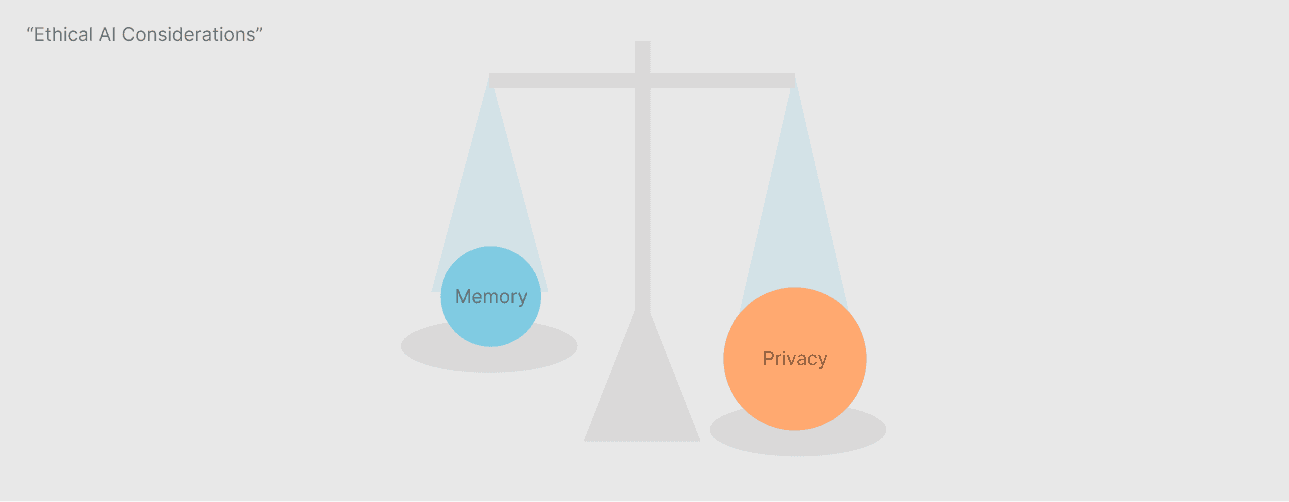
Context‑aware AI can feel like a second memory, quietly recording and recalling the small details that keep older adults safe and independent. But every helpful recap, reminder, or retrieval is powered by data from someone’s living room, commute, or bedside routine.
This section asks a hard question: how much access to our daily lives are we willing to grant in exchange for care and convenience?
Reflection
Recapping what I've learnt
"Always-on" memory and its real cost
Designing this system means designing the boundaries, what is not recorded, what is forgettable on purpose, and how visibly those choices are surfaced to families.
Preserving agency while caring