Disaster Relief Management • IDA Award Recipient
Cyren: Powering Communication, Driving Action
Role
Design Narrative Lead
UI/UX Designer
Timeline
Mar - May 2025
Tools
Figma
Figjam
Final Cut Pro
Team
Lily Spiller
Mercedes Chan
Spencer Henderson
Taylor Lawver
Overview
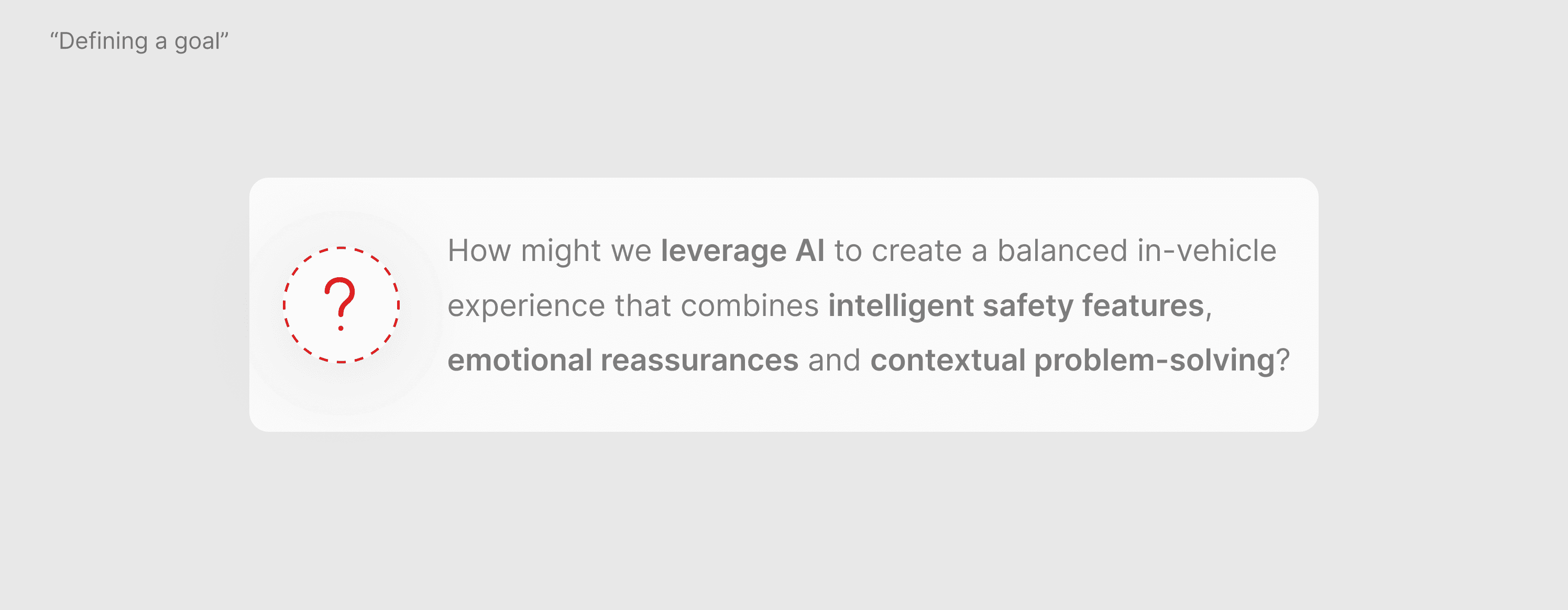
How might we equip disaster response teams to act faster, safer, and more confidently in high-impact environments?
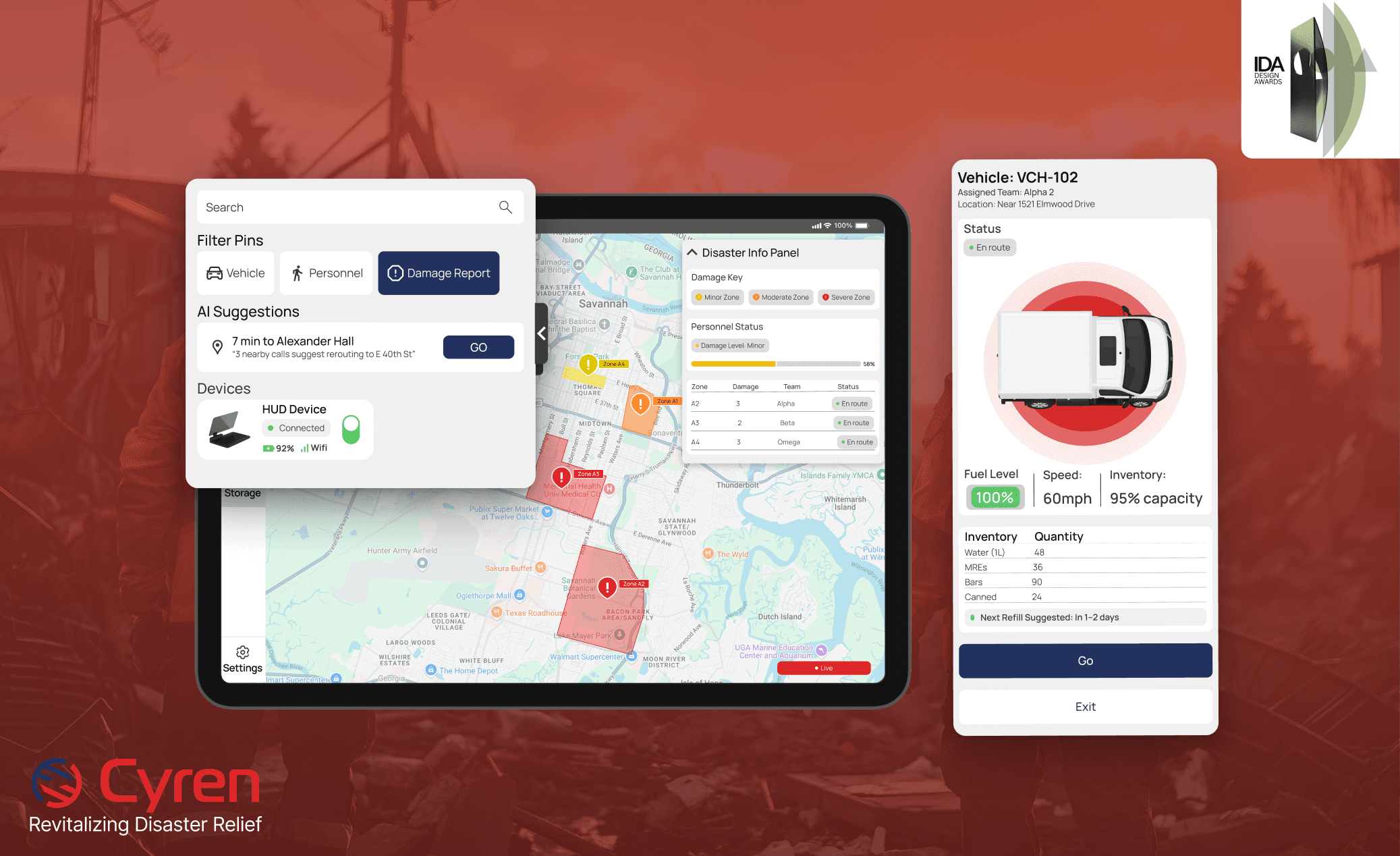
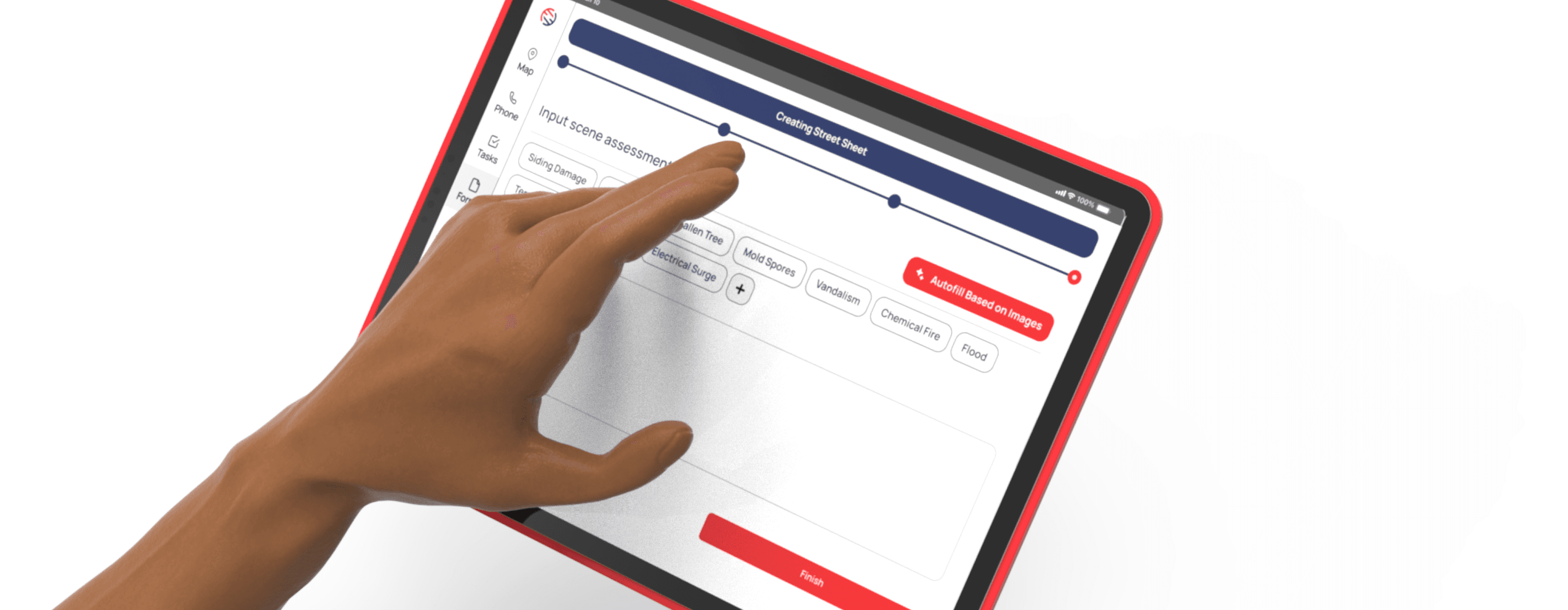
Cyren is a tablet and HUD interface designed to convert live disaster data into immediate, actionable guidance. The focus is not only on interface design, but on system orchestration: designing for trust, resilience, and continuity when connectivity is limited, conditions evolve rapidly, and every decision has real-world consequences.
Product Strategy
Extending disaster response tooling beyond static dashboards into adaptive, field-ready systems.
Prototyping & Testing
Prototypes evaluated across realistic disaster simulations to ensure clarity, speed, and operational trust.
Awards and recognition
Our project recently won an International Design Awards (IDA) Honorable Mention, 2025! View Award ↗
Problem
Limitations of today’s response infrastructure
Disaster response work often unfolds across uneven timelines. What is observed in the field, what is documented, and what informs action rarely happen in the same moment. This delay between observation and operational response creates invisible risks.
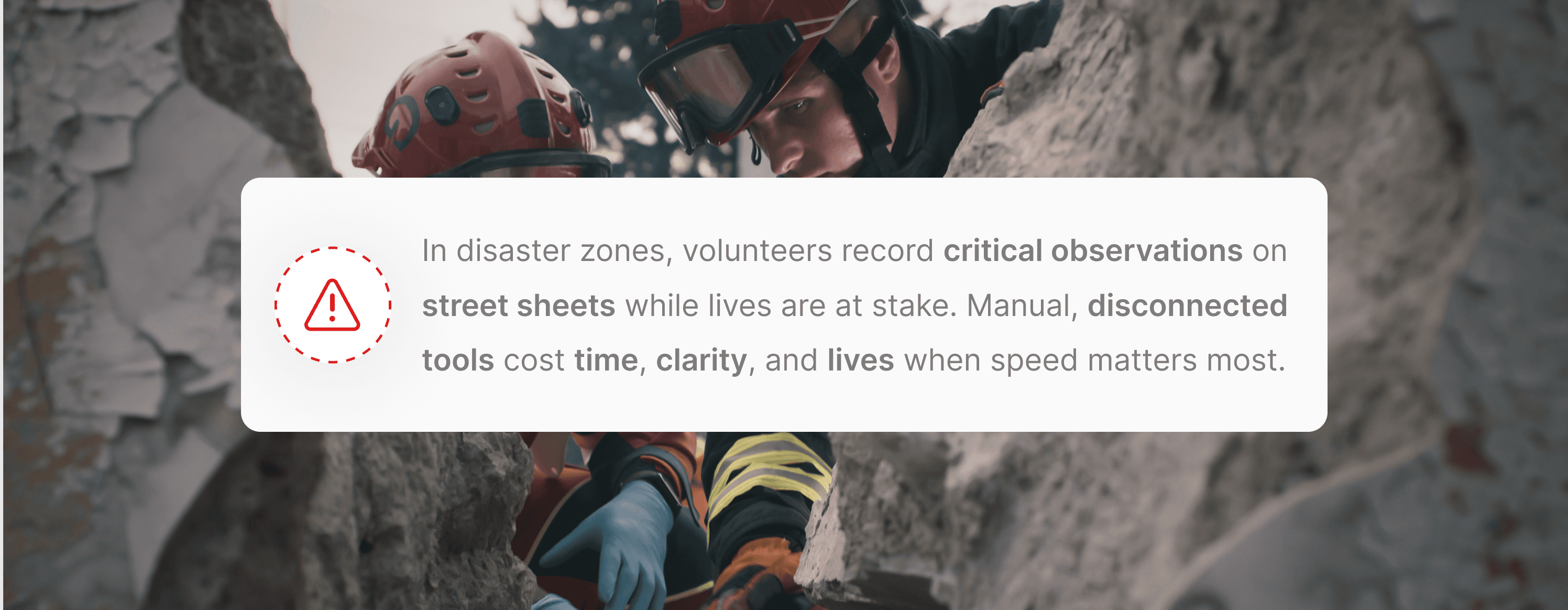
This misalignment reveals a deeper issue: current response infrastructures are not designed to continuously translate field conditions into operational decisions at scale.
Solution
AI-driven coordination across disaster operations
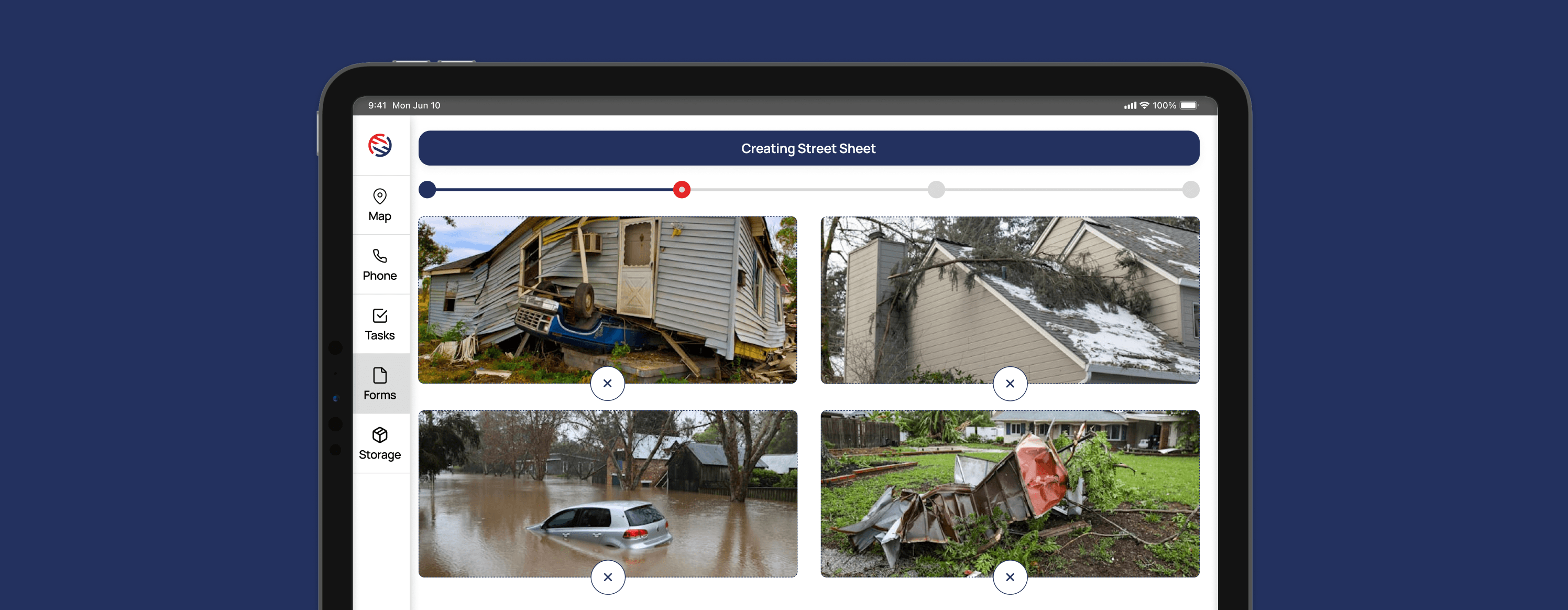
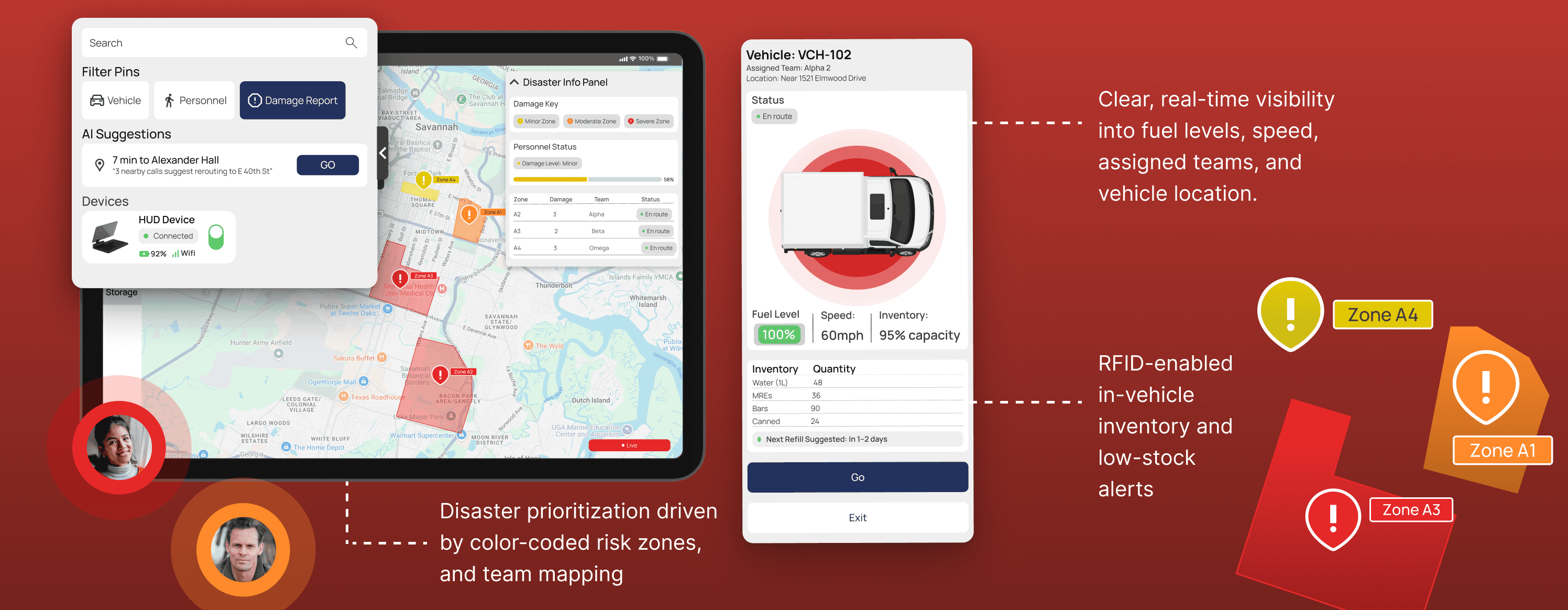
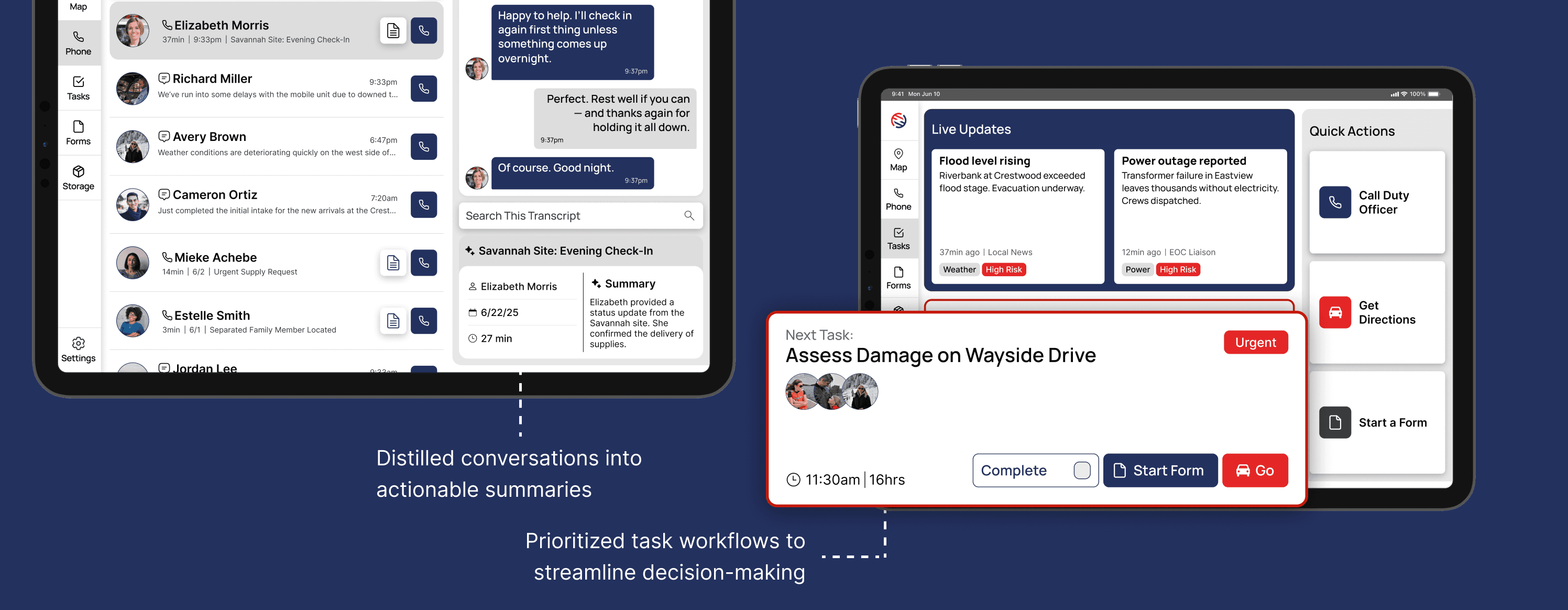
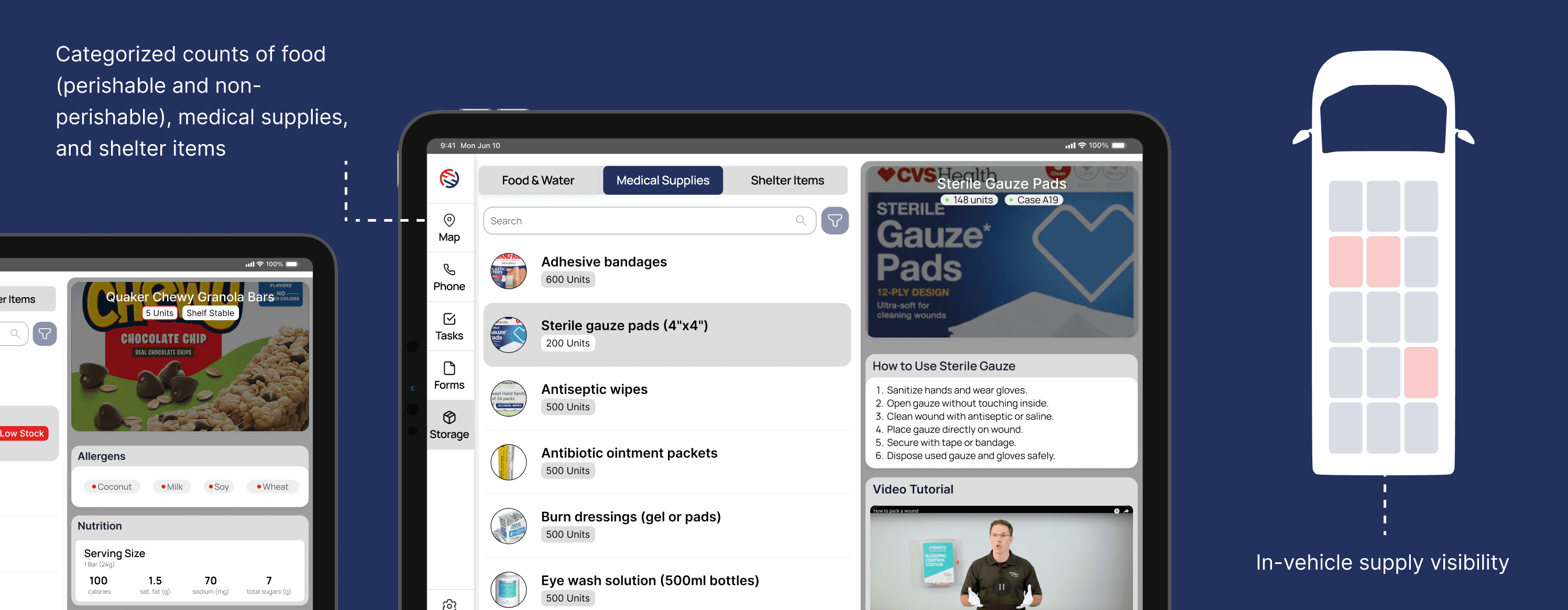
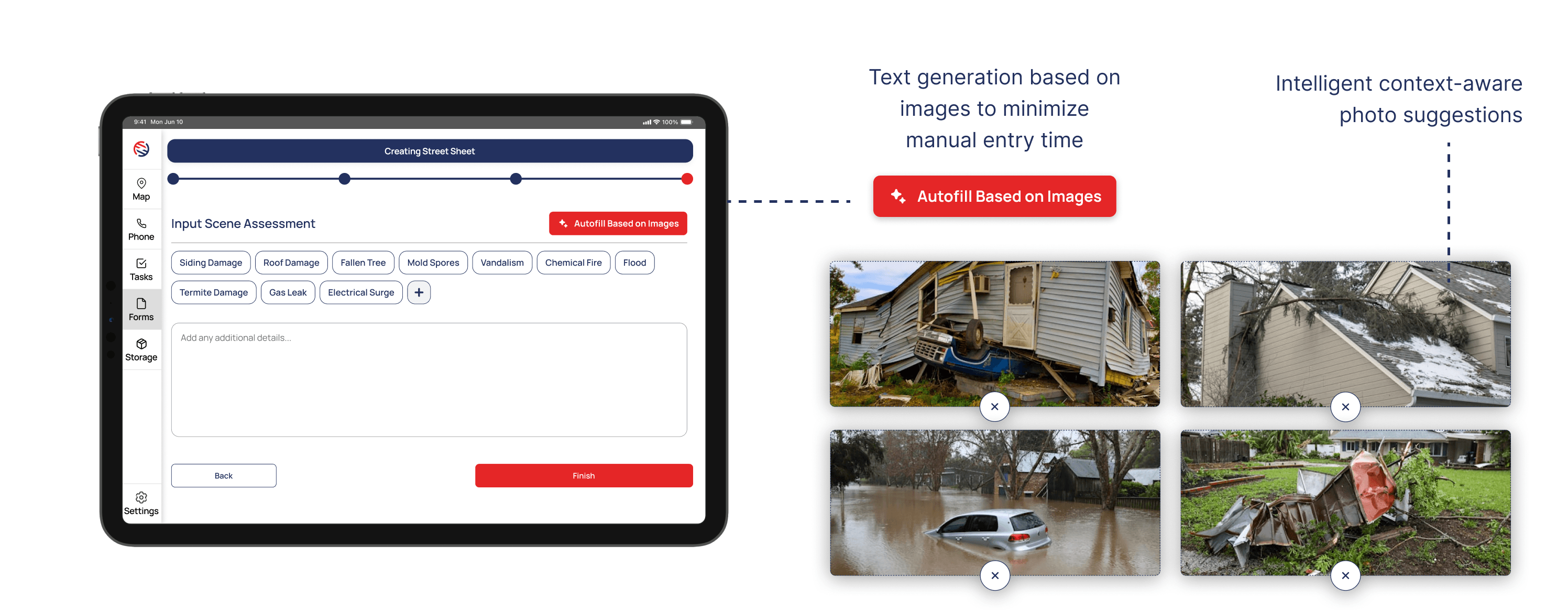
Cyren is an AI-enabled disaster response system that operationalizes real-time field data into actionable intelligence. It integrates RFID-tagged supply tracking, live team and vehicle status, and geospatial deployment data to maintain continuous visibility across resources, personnel, and on-scene conditions.


Secondary Research
Translating disaster complexity into design direction
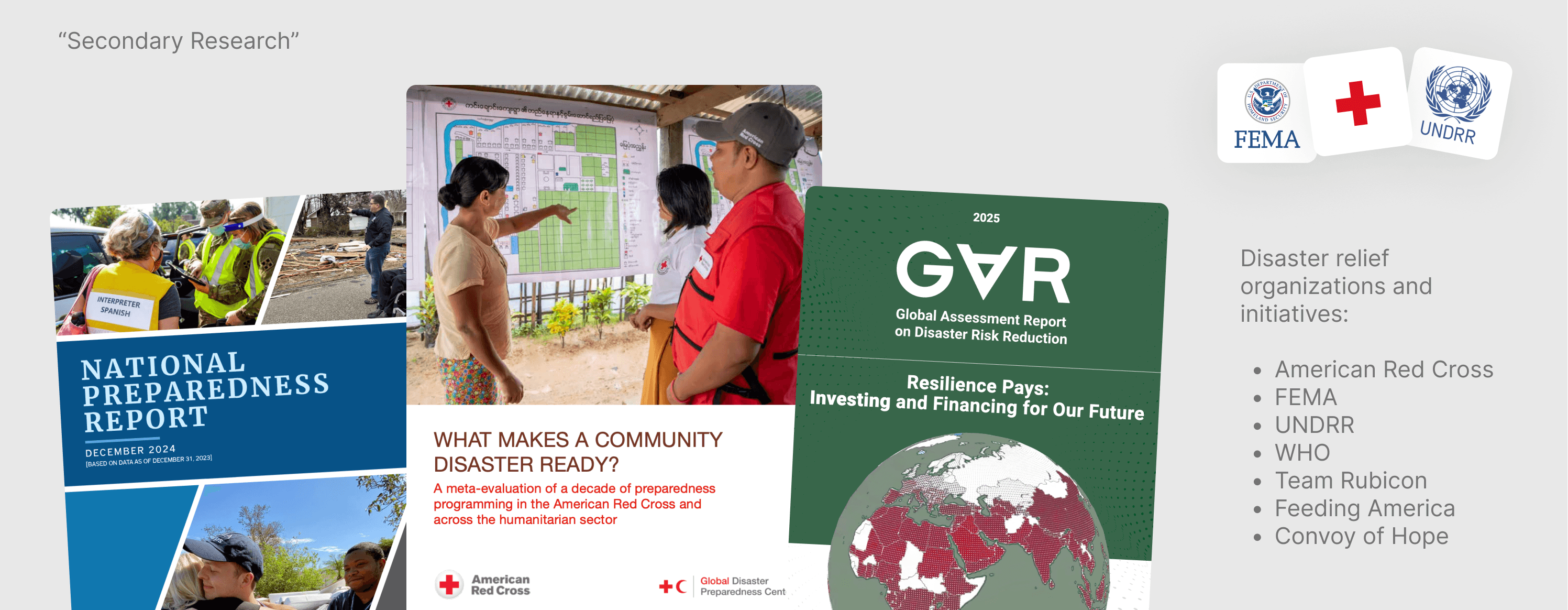
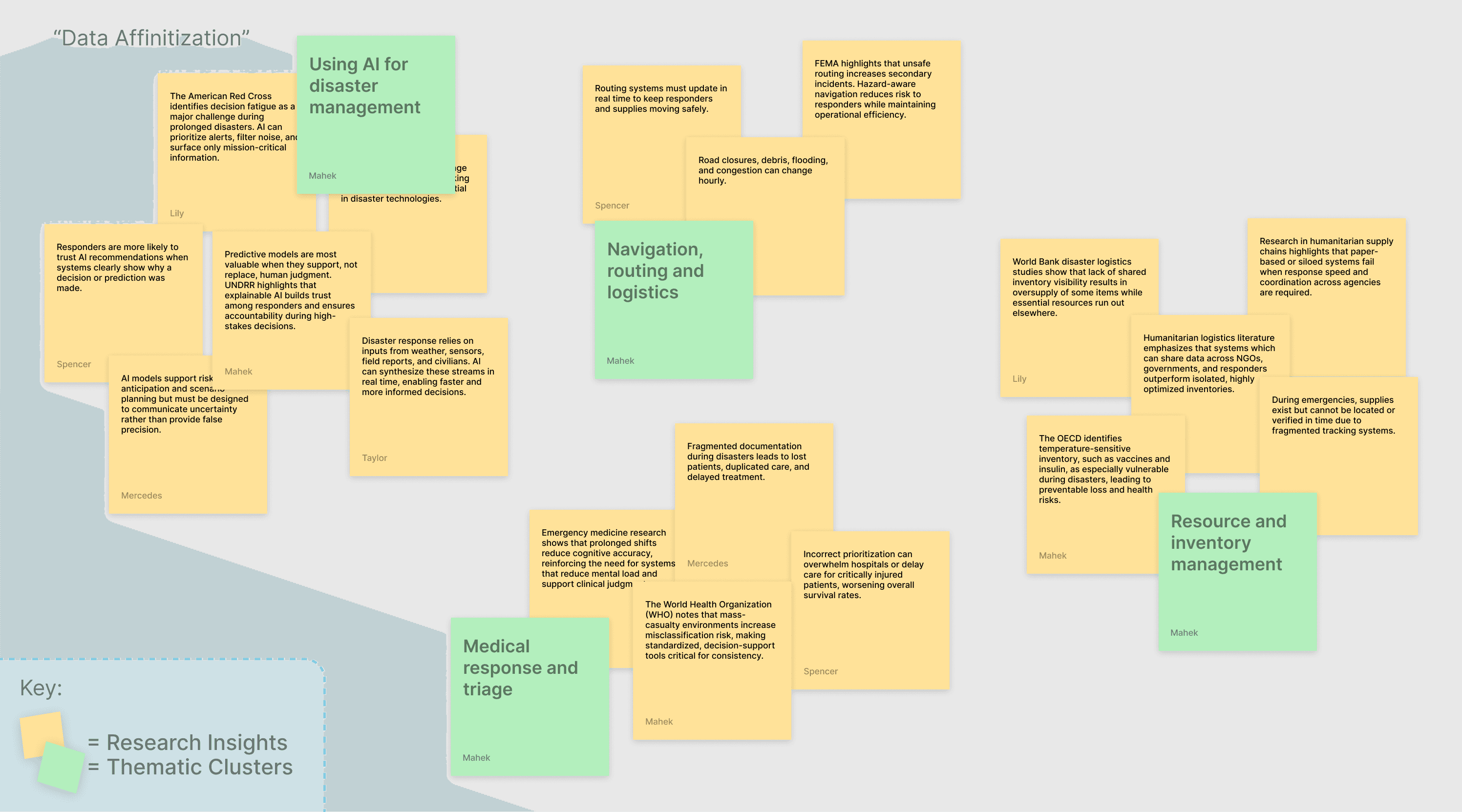
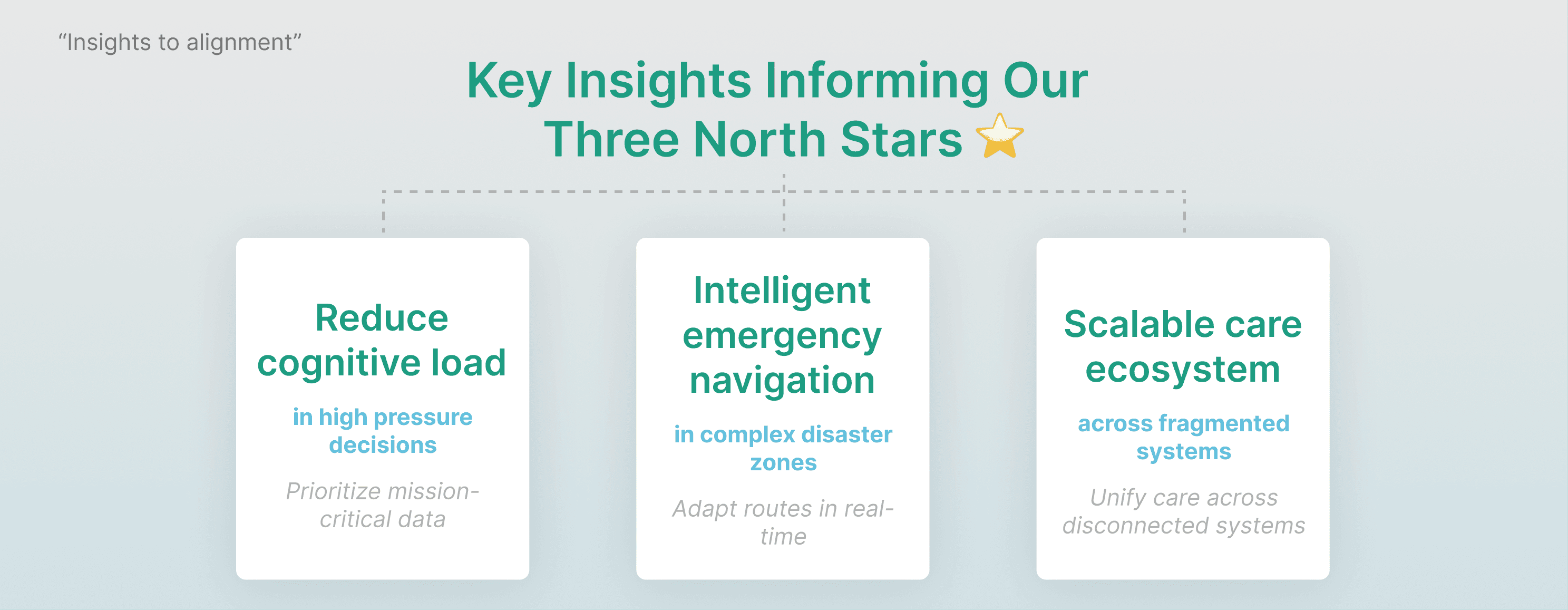
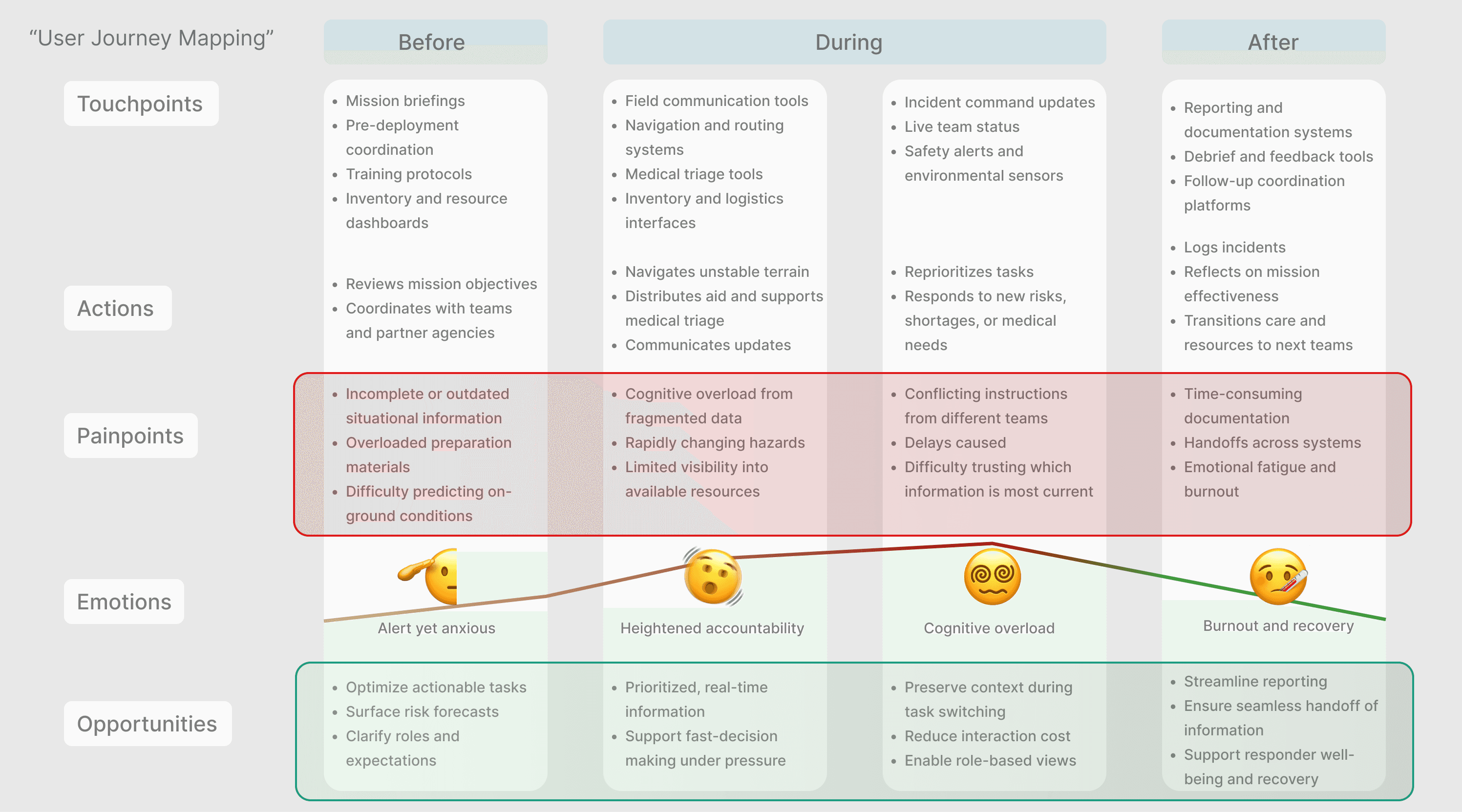
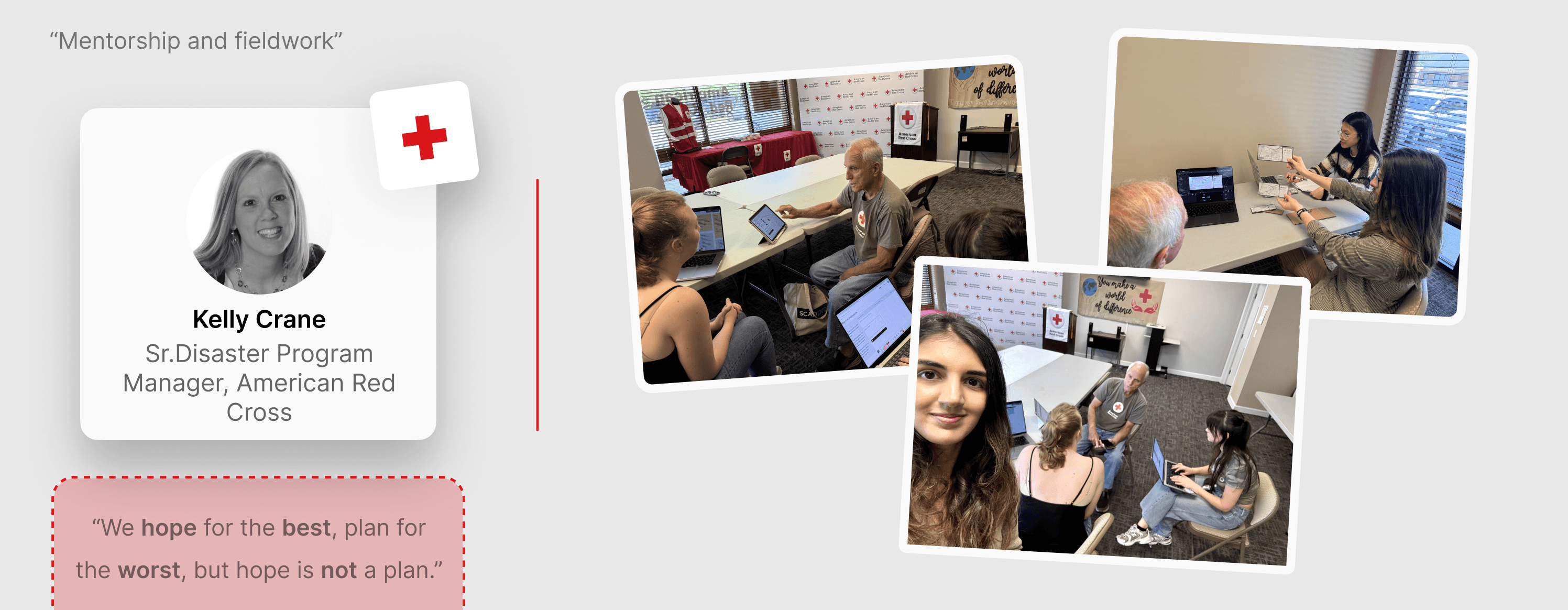
Data affinitization from disaster resources, reports and interviews with frontline workers from American Red Cross frame disaster response not as a sequence of tasks, but as a continuously evolving system that must remain legible, responsive, and trustworthy in real time.
End-users
Designing for those who risk everything
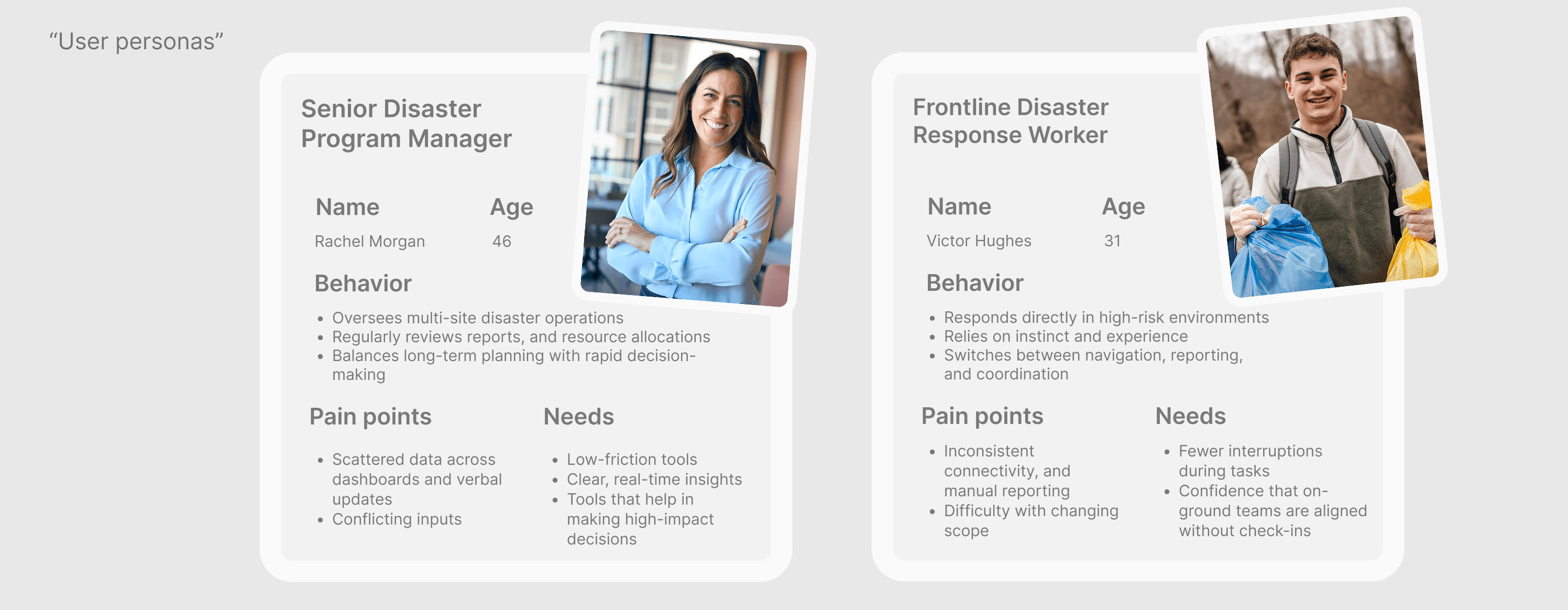
Cyren is designed with the understanding that we are building for individuals who absorb risk on behalf of others. High-stakes environments, where attention is finite, conditions shift without warning, and decisions carry irreversible consequences.
These are not edge cases or extreme scenarios; they are the daily reality of disaster program managers coordinating across regions, and frontline responders navigating unstable terrain, incomplete information, and physical danger.
Reflection
Recapping what I've learnt
Designing for complexity means designing for restraint
Over the course of this project, I learned that the most responsible systems are not those that attempt to solve everything, but those that clearly define what they should not do.
Accountability as a designer