Cyren
Emergency UI
Disaster Relief
Cyren reduces cognitive load for first responders by reimagining disaster response.
My Role
I spearheaded complex research findings from every phase of the design journey into clear, actionable strategies. I was able to distill the complexity of disaster response into four key opportunity areas:
1) Mission-centric information filtering
2) Real-time team and resource visibility
3) Seamless communication and contextual intelligence
4) Adaptive reporting and auto-assist tools
Design Narrative & UX Research Lead
Duration
10 Weeks
Timeline
March - May 2025
Impact
Simplified reporting time with AI-assisted form generation and voice transcription.
Built user interface prototypes with 90% task completion success in user testing.
Tools
Figma
Figjam
Rhino 8
Keyshot
Design stack and render pipeline
Awards Cycle: 2025-26
Recognition
International Design Awards Nominee 2026
Team
LS
Lily Spiller
SH
Spencer Henderson
MC
Mercedes Chan
TL
Taylor Lawver
How Cyren transforms response…

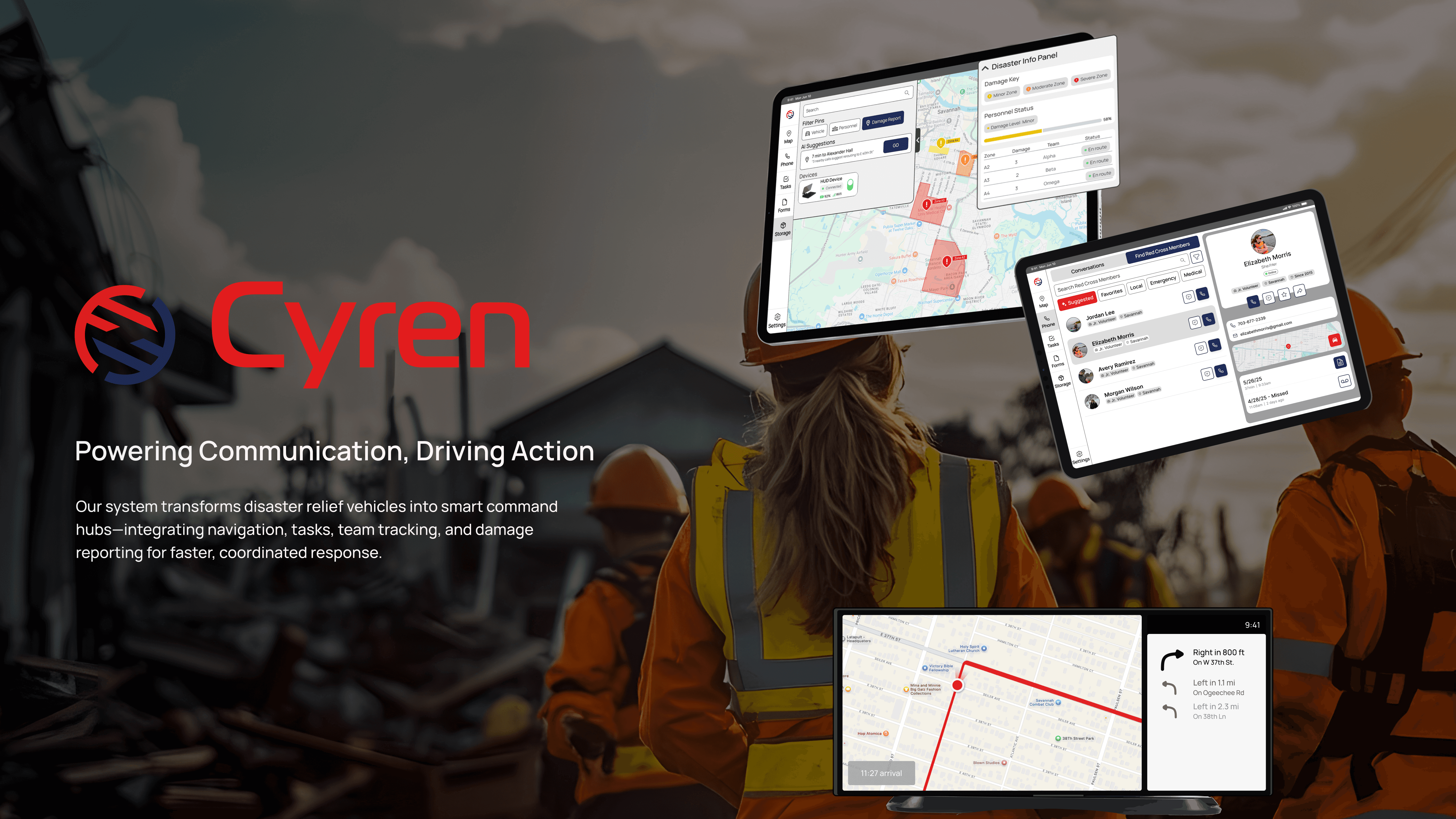
Cyren simplifies fieldwork by turning quick actions into instant progress, making sure both field teams and headquarters share the same clear picture. It employs an AI-driven vehicle ecosystem, combining real-time data, modular UI dashboards, and seamless communication tools.

KELLY CRANE
Senior Disaster Program Manager, American Red Cross
"We hope for the best, plan for the worst. But hope is not a plan."
Inside Cyren's Platform
Designed for Frontline Heros
The first to arrive, the last ones to leave.
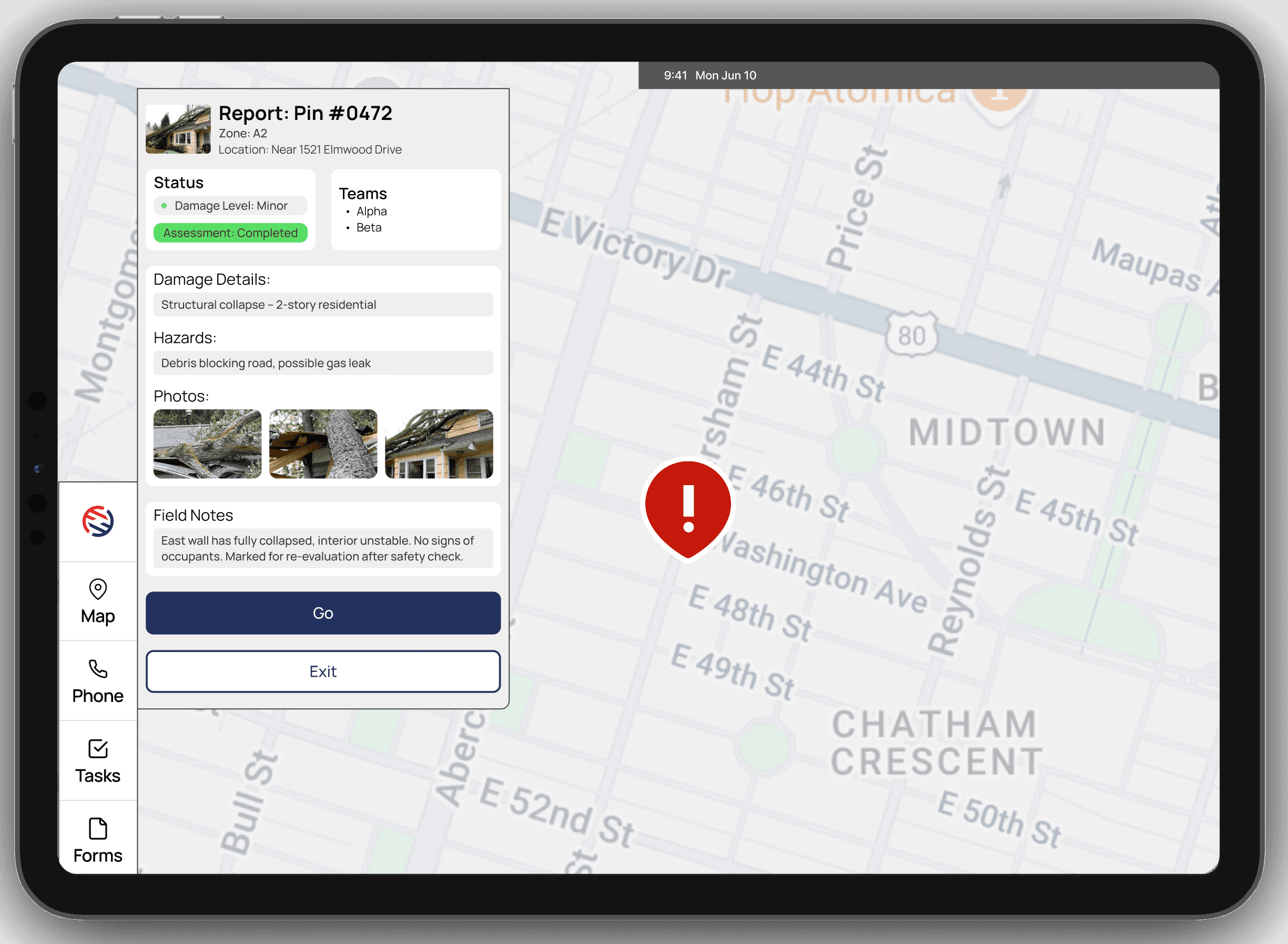
AI that listens, AI that acts
AI logs each conversation and recommends the most critical actions to keep the mission moving.
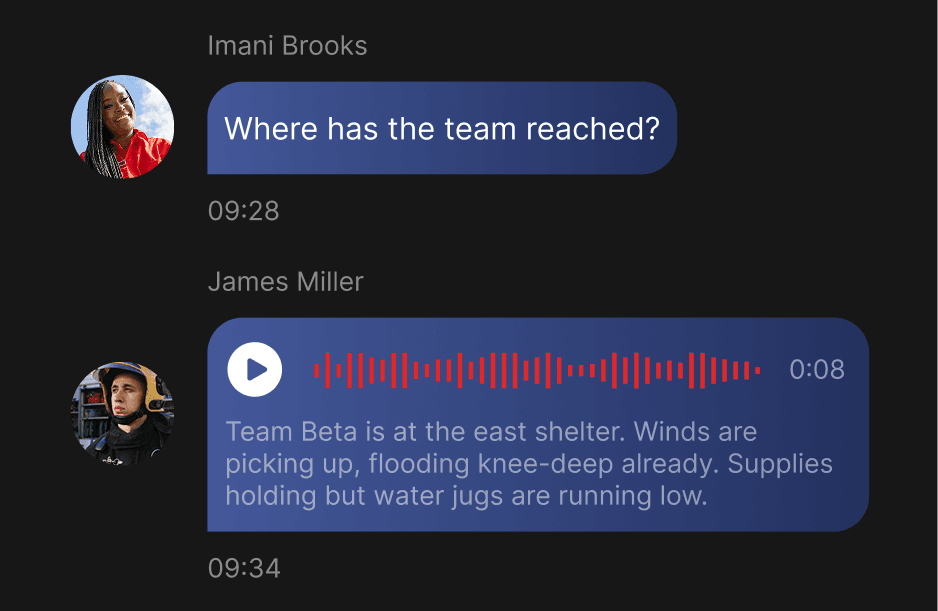
Voice-to-Text
Voice messages can be converted to text for those times you don't want to listen, but want to see what it says. You can rate transcriptions to help improve them.
Mission-only updates
Teams are able to zero in on live updates and tasks that are relevant to their mission.
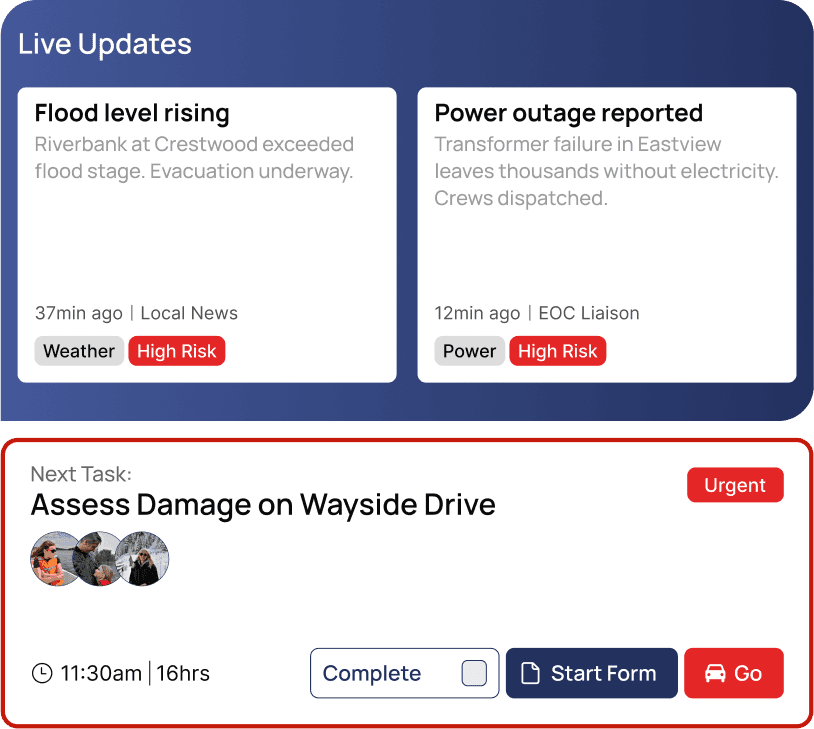
Mission-only updates
After you post a story, you can open it to see the list - which you can filter to show just your contacts, and sort by recent views first or reactions first. If you want to check if a specific user saw it, type their name into the search bar.Body Text
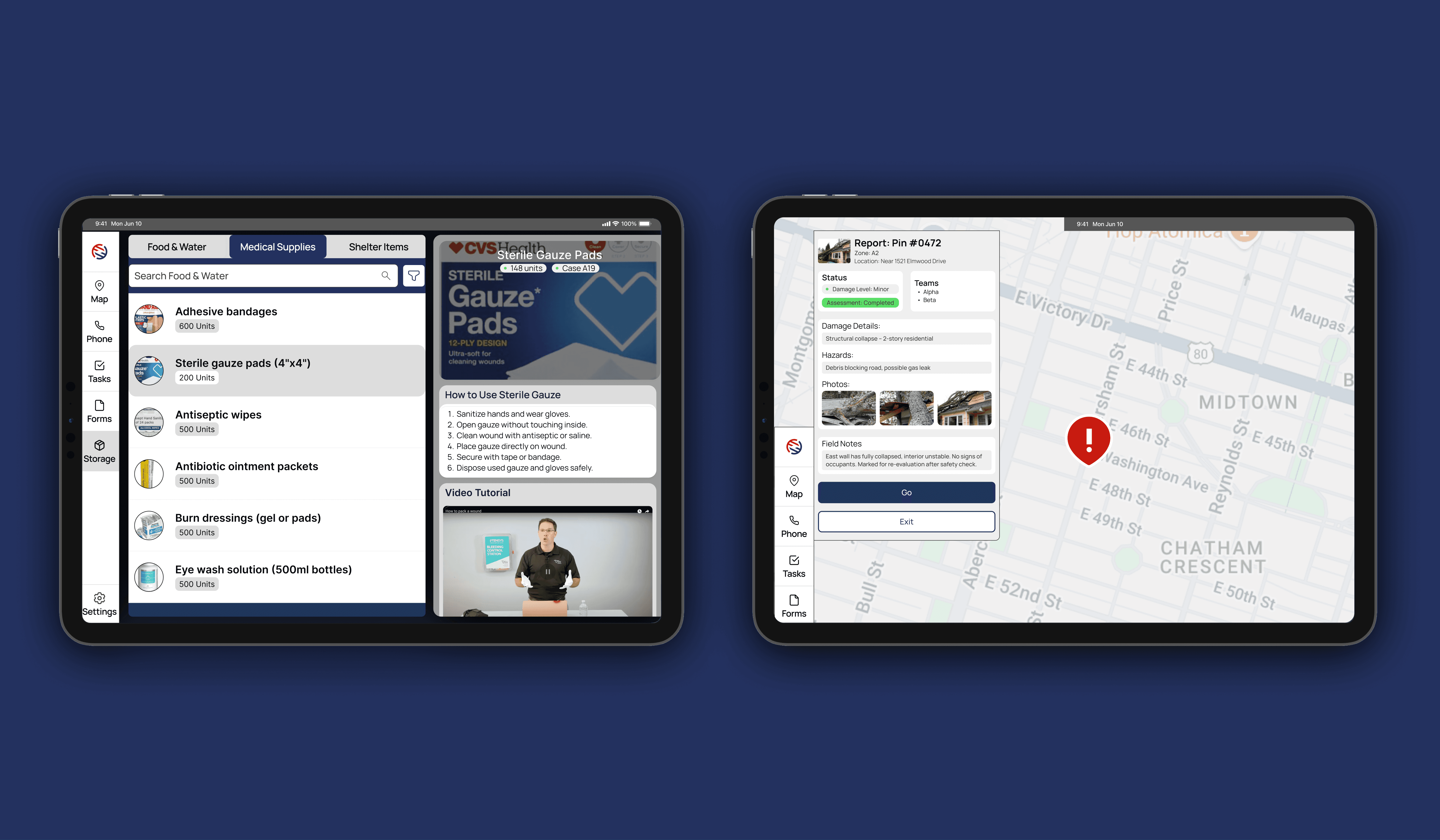
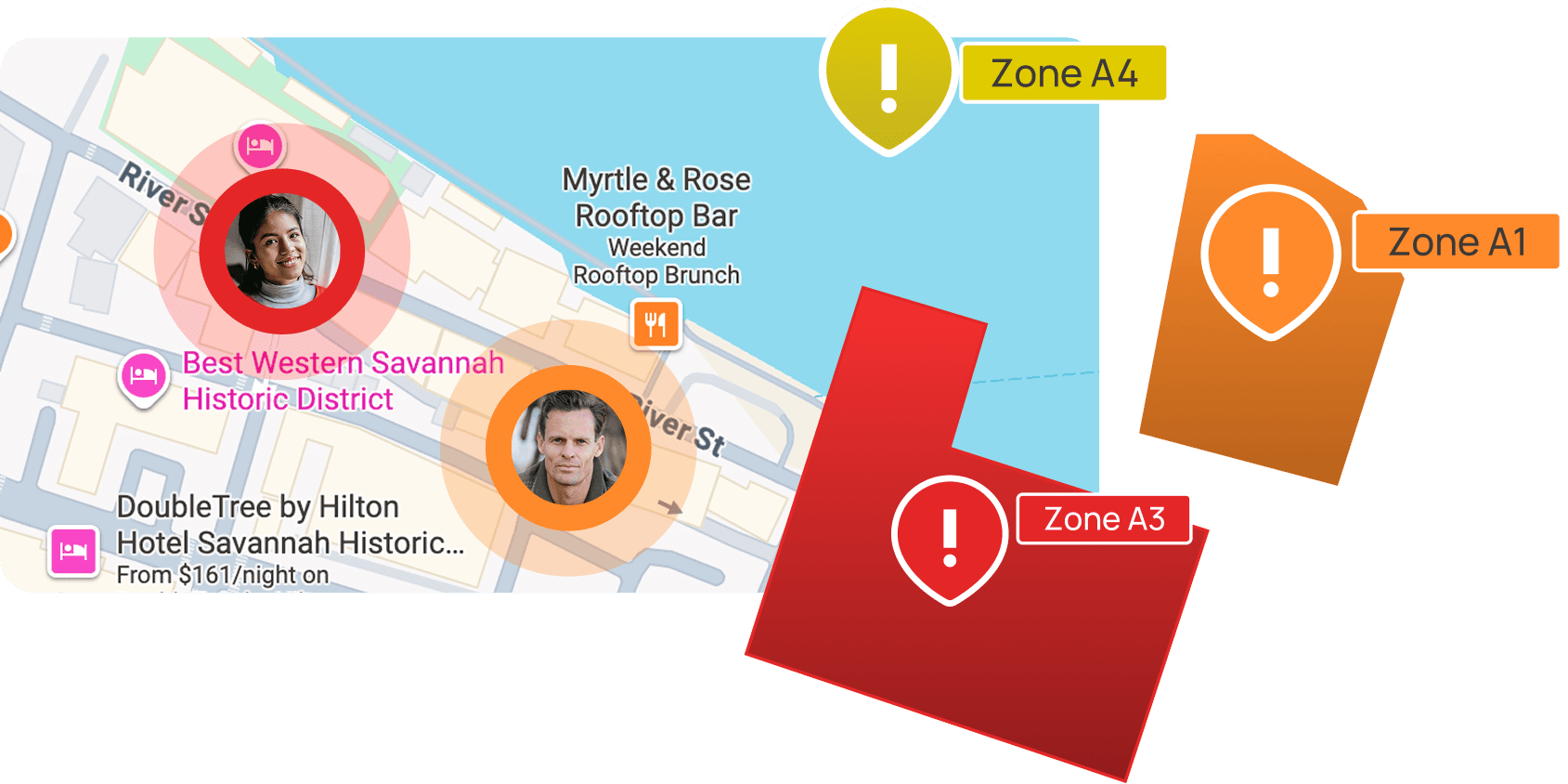
Real-time team mapping
Mission-centric delays are avoided by viewing entire team's active deployment zones.
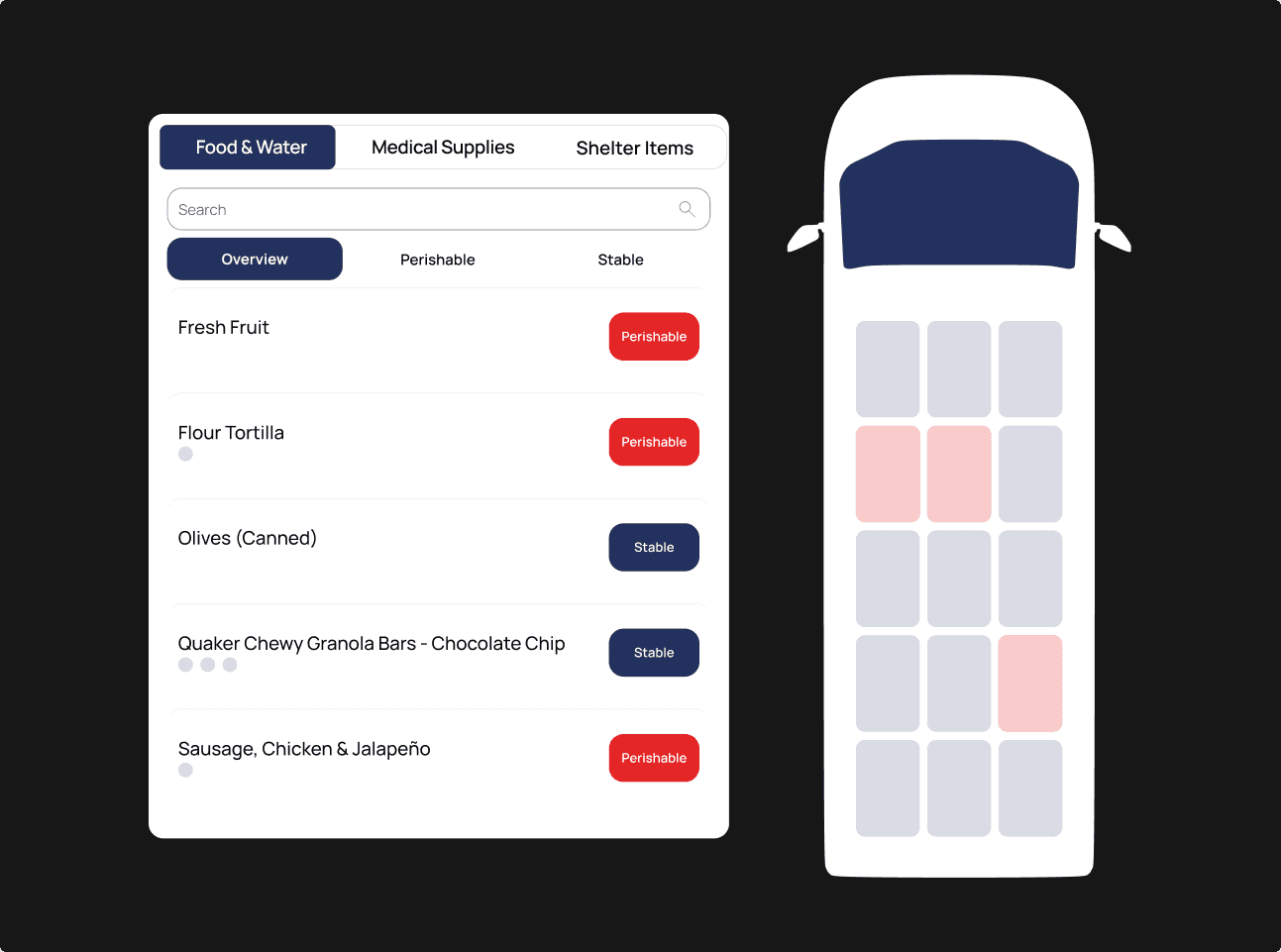
Smart inventory mapping
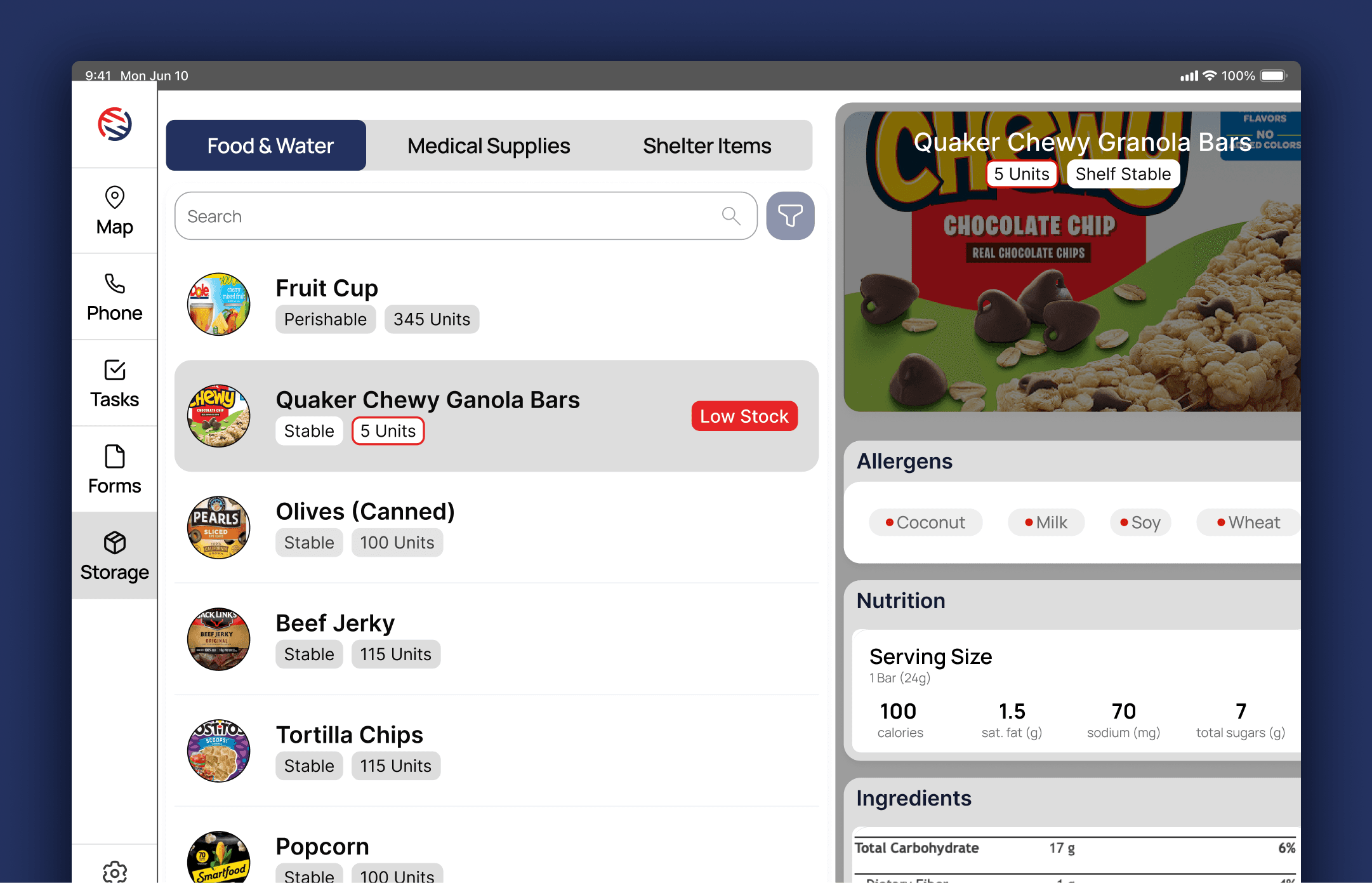
A clear vehicle map and live count tracks supplies by location and quantity.
How the idea took shape…
What began as a simple question, "How can we reduce chaos in disaster response?" evolved into a platform that unifies communication, resources, and teams.
What frontline workers say about the problems…
“I have worked for the Turkish Red Crescent… One of the most critical parts of our job is engaging with the communities we help, to hear people’s perceptions, so we can respond better to their needs.”

Sevde Nur Söylemez
via IFRC
“Radios only were given to the company officer… Radio communications between mutual-aid companies weren’t compatible… Communications between police/fire/EMS weren’t operable.”
Michael Daley
via Firehouse Magazine
“This isn’t just about technology—it’s about fundamentally changing how we respond to humanitarian crises.”
Shahzad Asghar
via UNHCR
"The learnings were about what the logistics system requires in each case, and how to build it quickly and scale it according to the needs of the response.”
Dr. Hosam Faysal
via IFRC
“Right now, we have a critical life-saving window—our teams are focused on ensuring people get the urgent support they need… including hot meals, hygiene items and psychosocial support.”
Ibrahim Ozer
via IFRC
“We really wanted to personalize our tool… and go farther with the possibilities of artificial intelligence… so we created our own ChatGPT instance trained exclusively on our dataset.”
Sebastian Salazar Tapia
via Medium
Stakeholder mapping
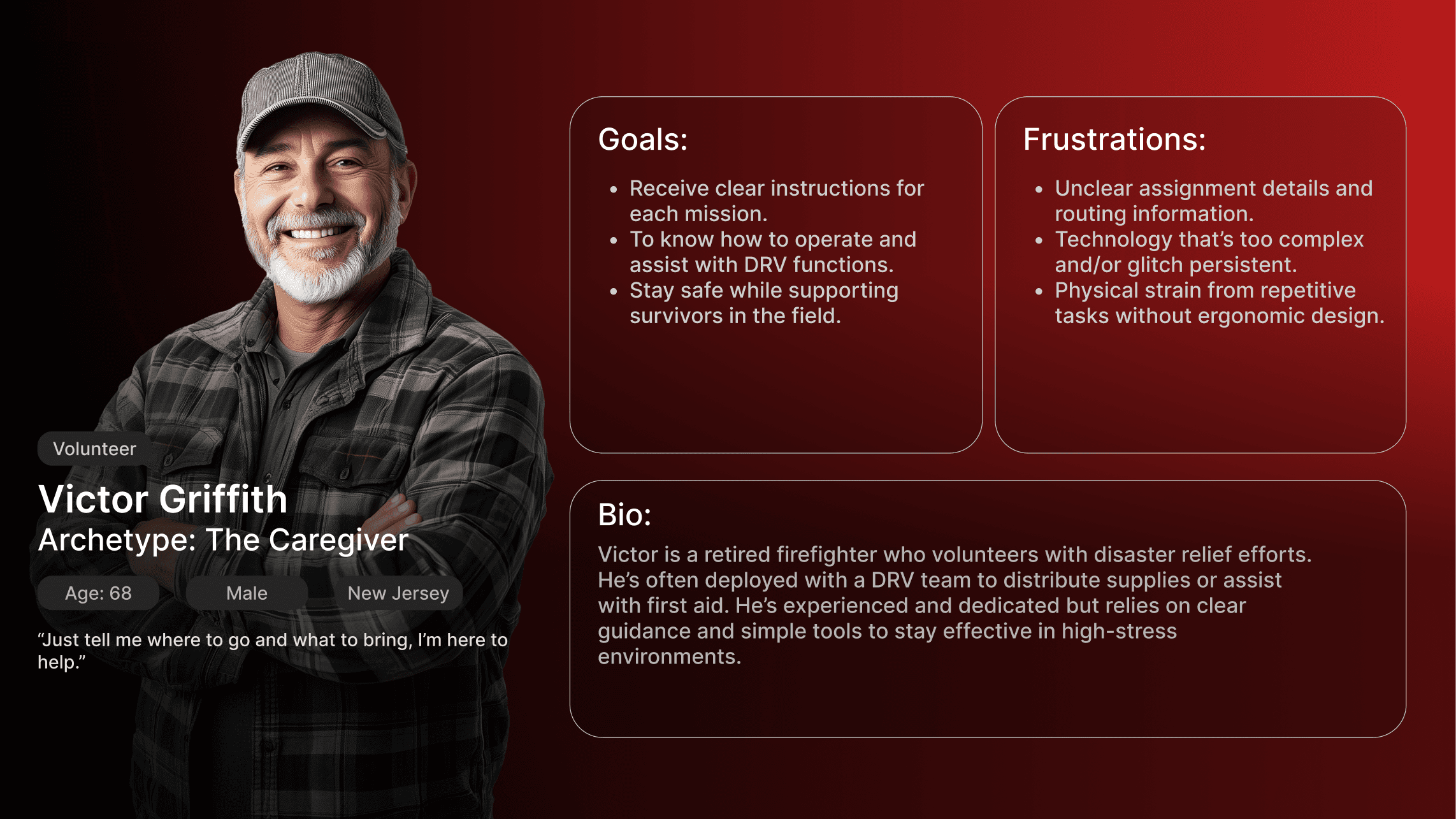
We mapped groups impacted by natural disasters. The tiered map enabled us to clarify whose needs we must solve first.
Core
Disaster Responders
Field Workers
Vehicle Drivers & Operators
Health Workers
Communities
Disaster Victims
Direct
Specialized Responders
Red Cross Leadership
Disaster Relief Teams
Communications & PR
Major Donors & Foundations
Media Outlets
Local Communities
Indirect
Insurance Agencies
Blood Banks
Soup Kitchens
Vehicle Manufactures
Government Agencies
Who are the primary users?
The target audience are front-facing individuals in high-impact disaster zones.
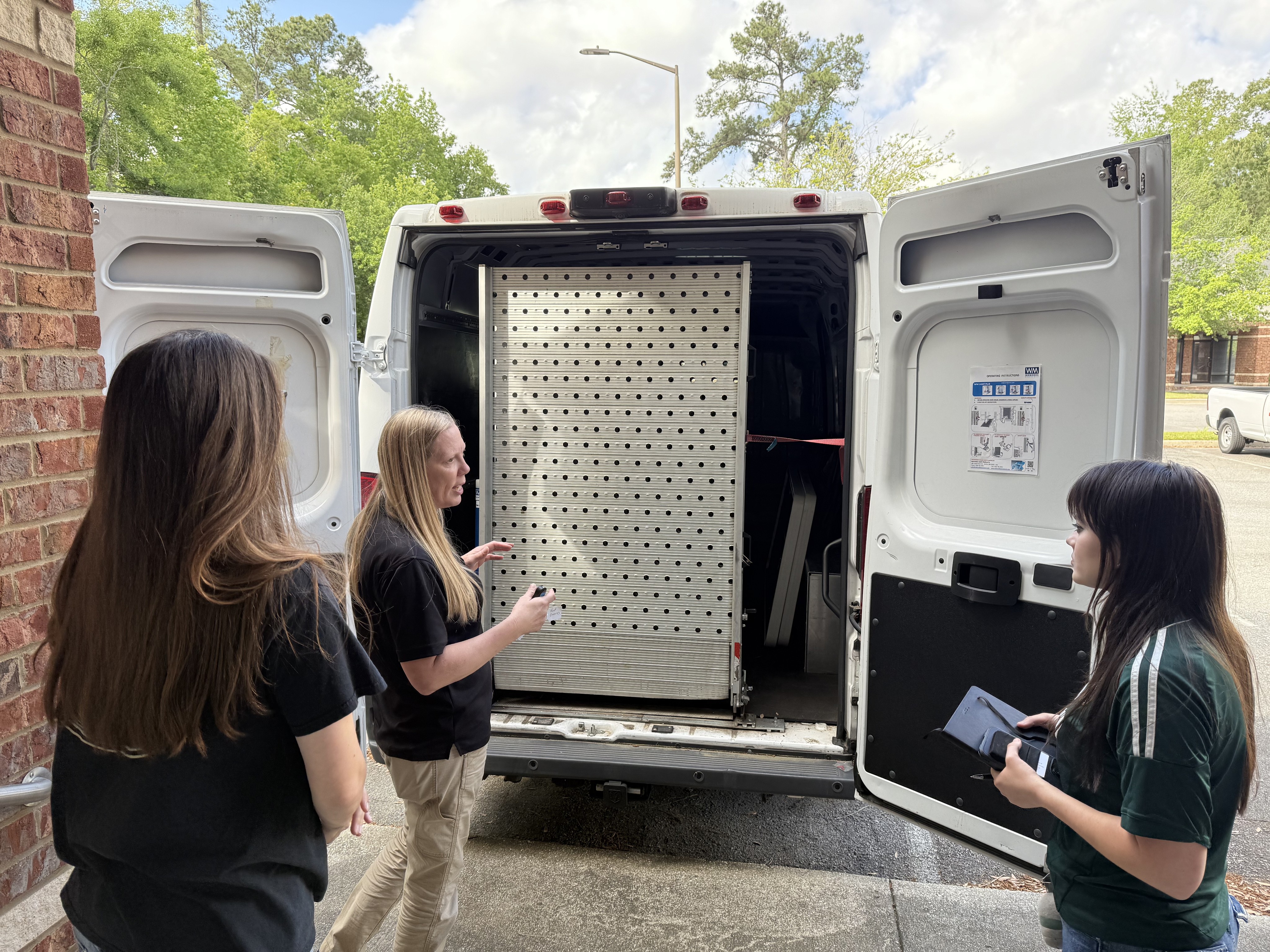
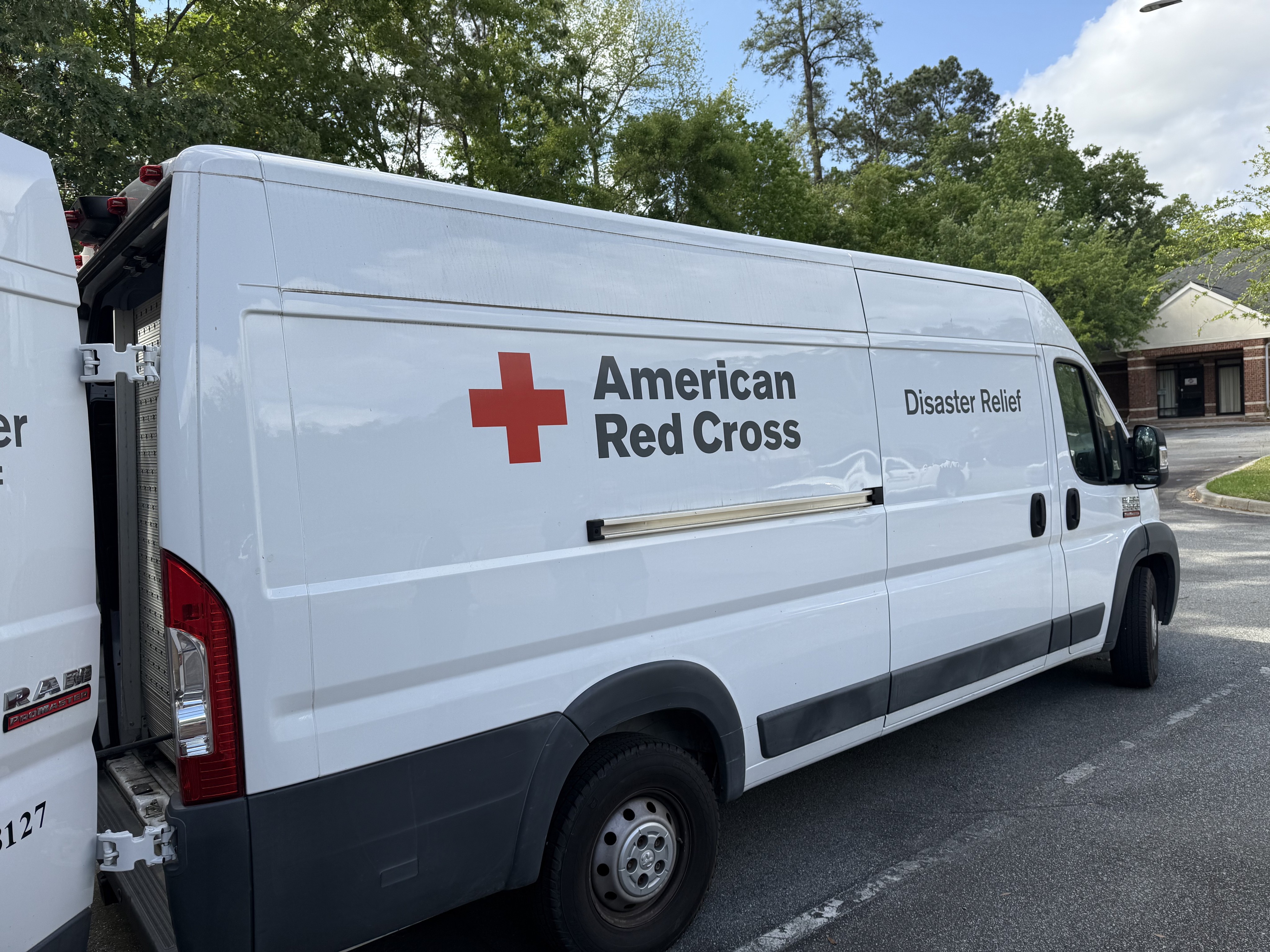
Field research
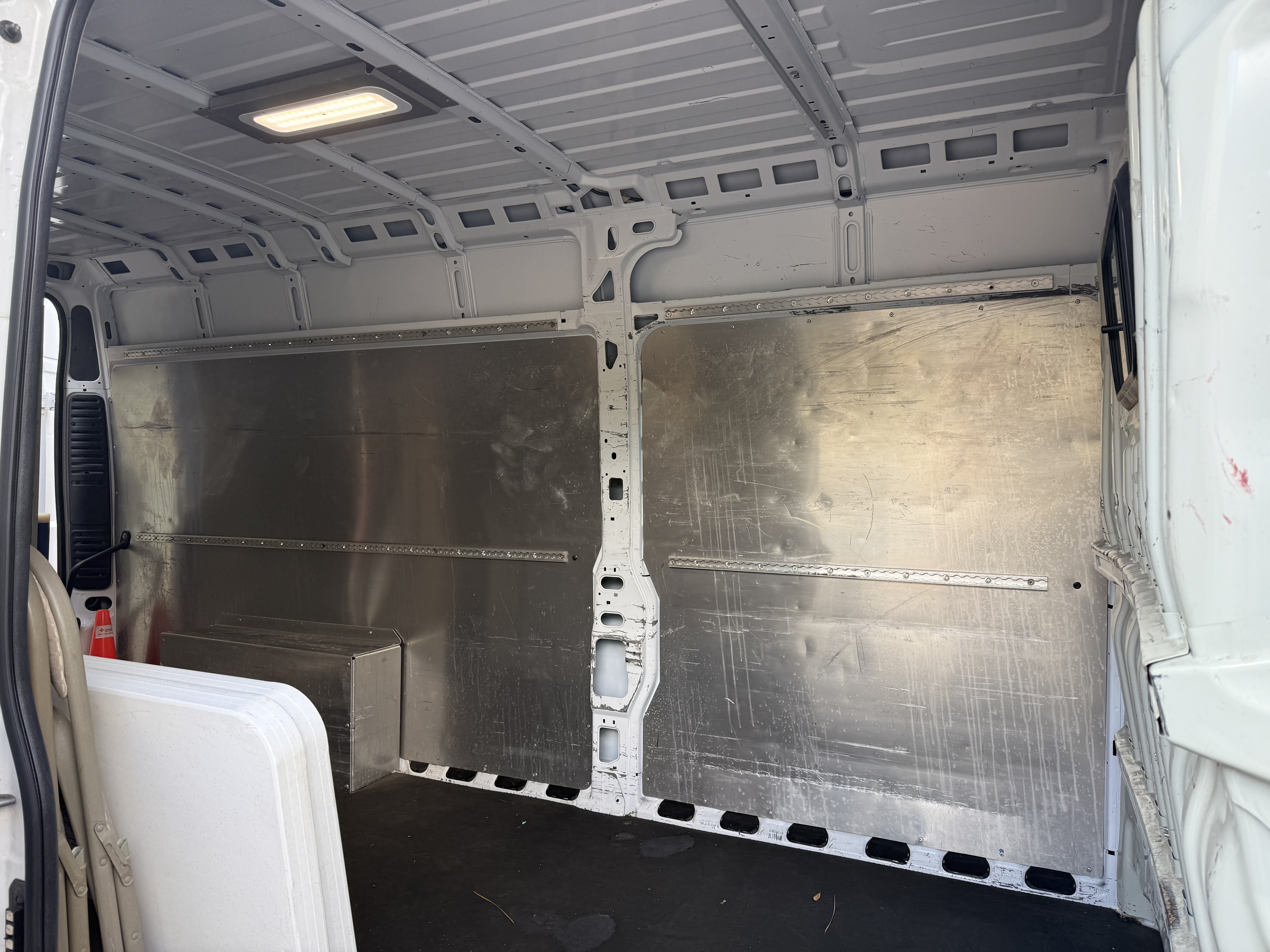
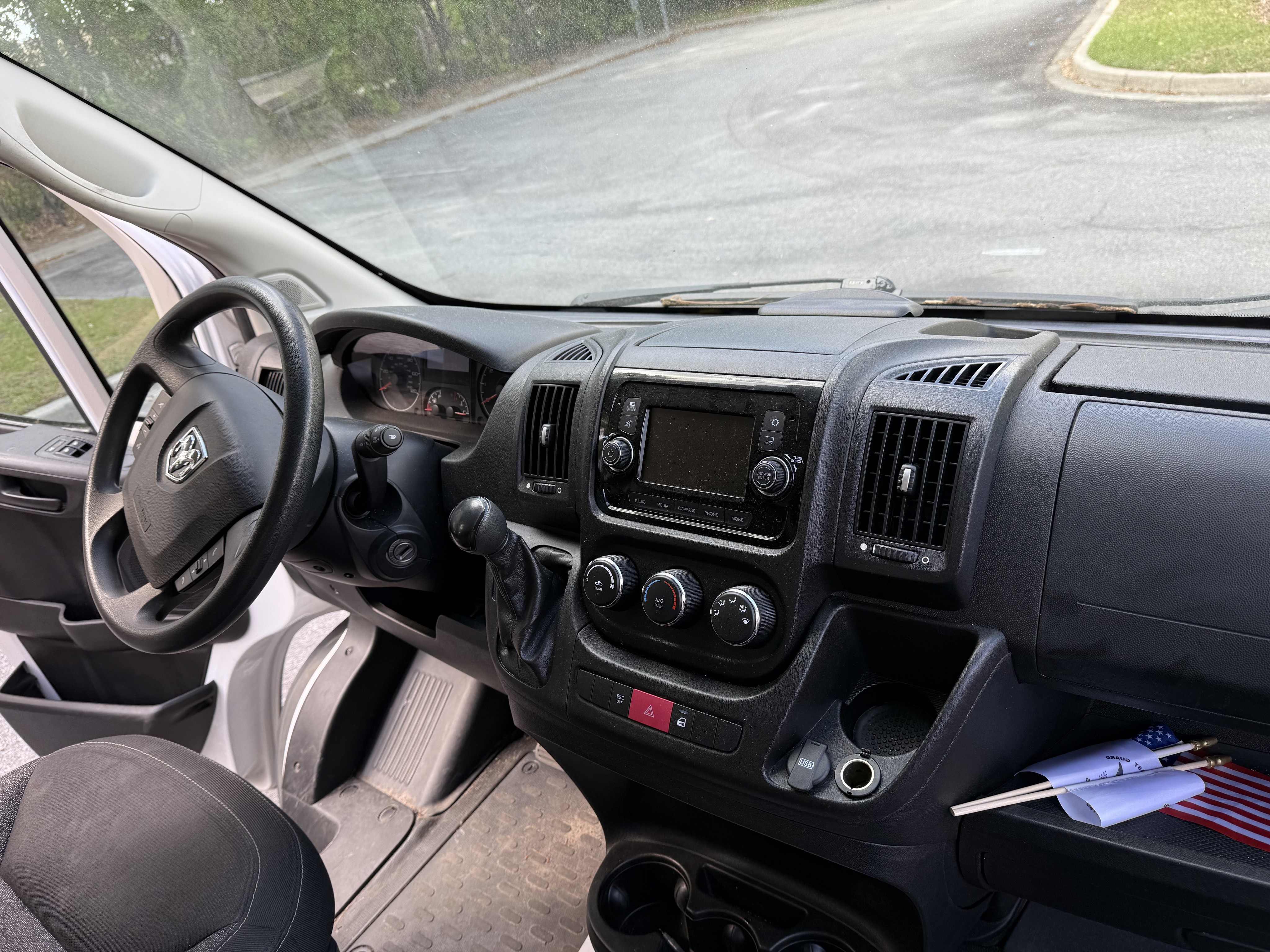
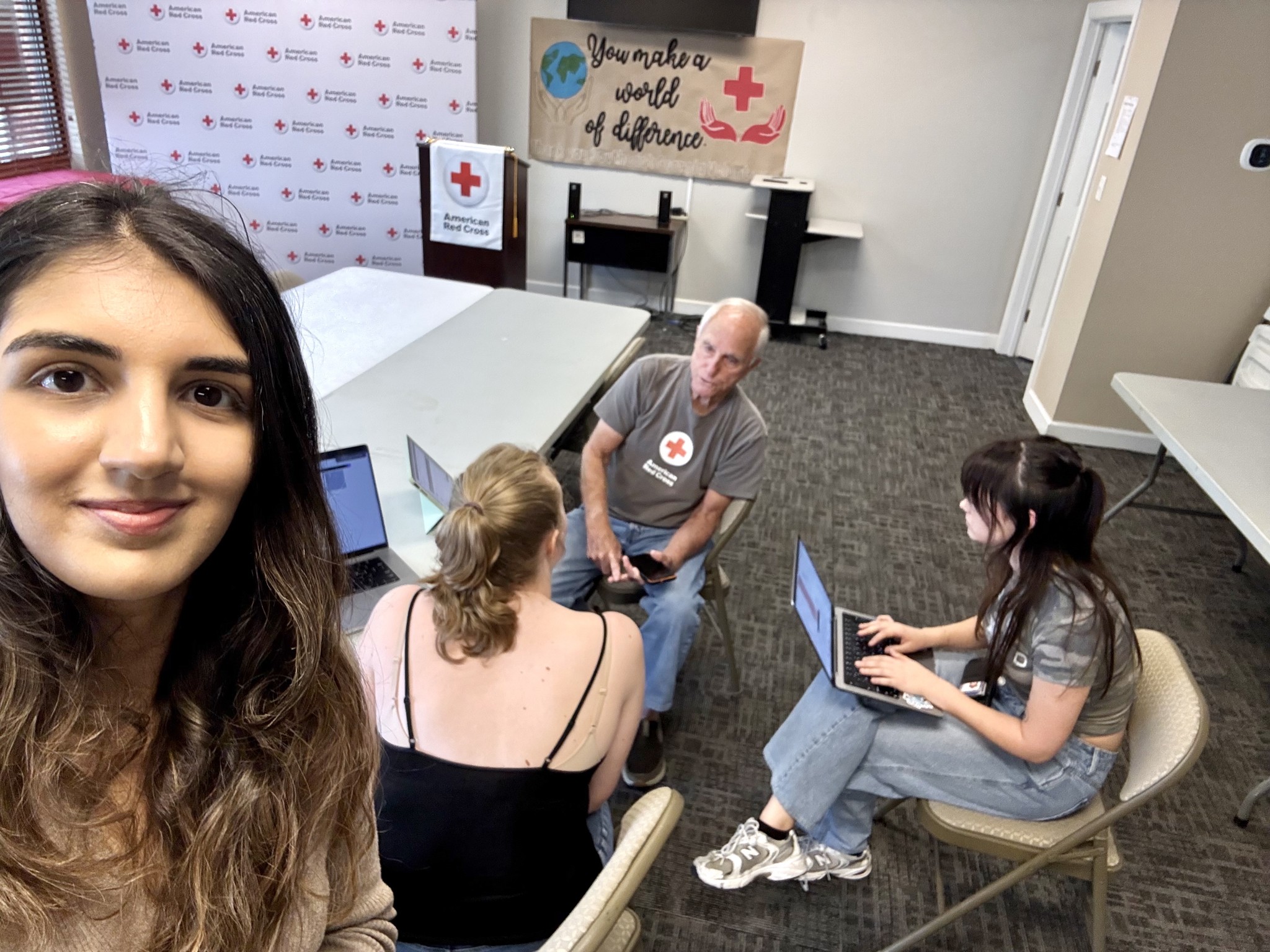
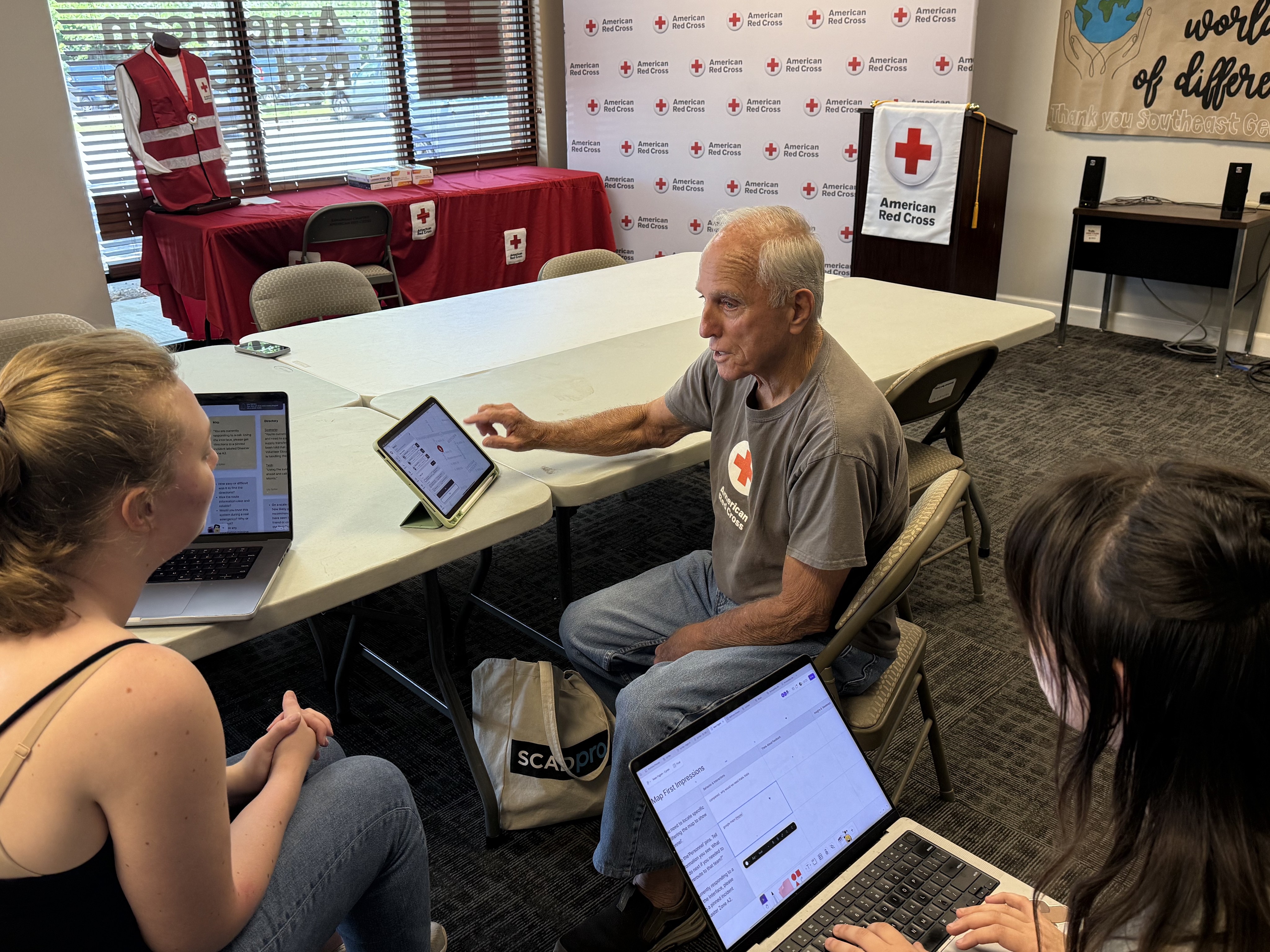
Five of us team members visited the American Red Cross Headquarters in Savannah to study their disaster response vehicles, exploring both the interior and exterior to identify gaps where design could help.
Surveying and user interviews
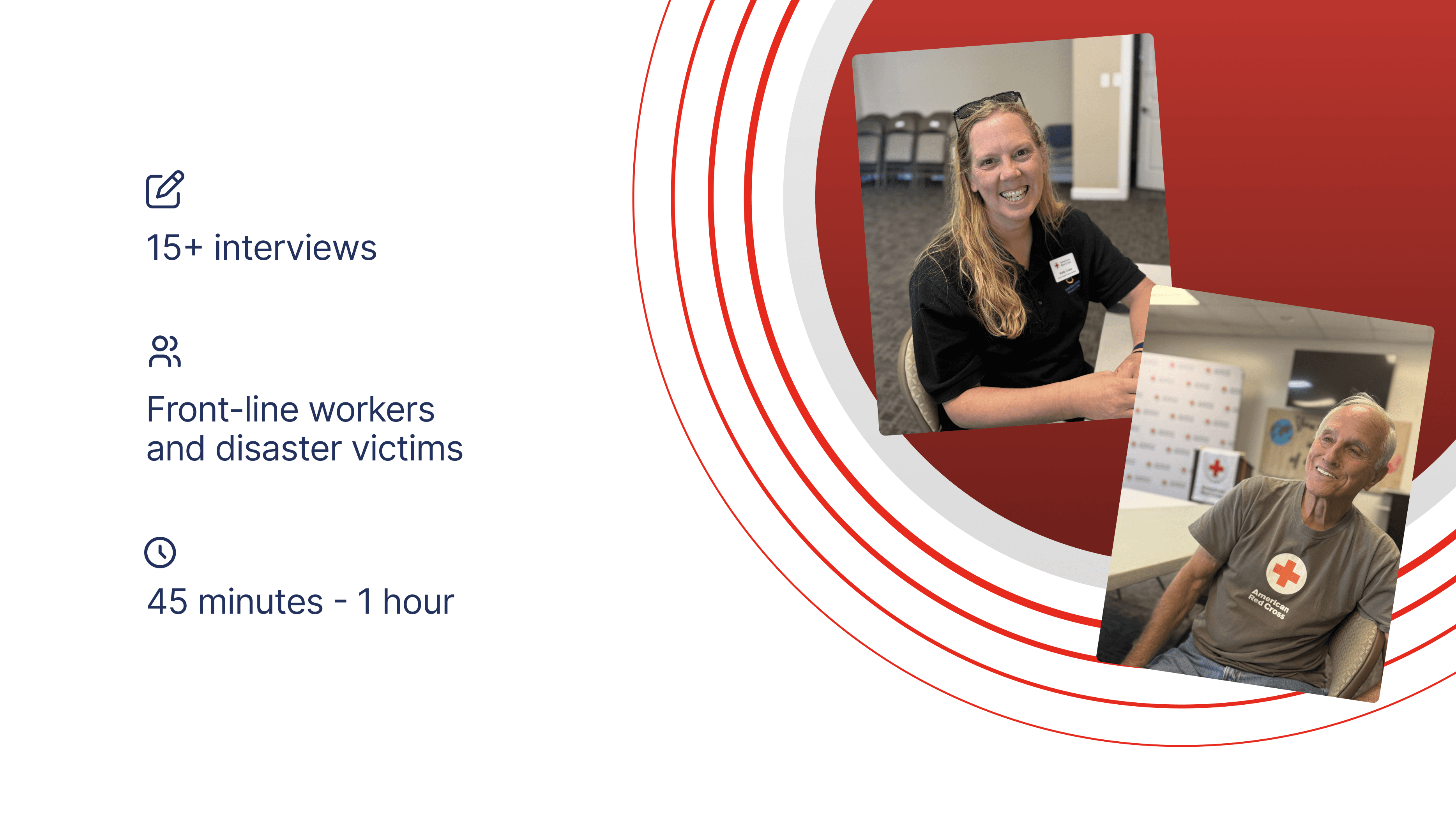
We applied qualitative research methods through semi-structured interviews to uncover pain points, mental models and unmet needs. Findings from affinity mapping, and thematic analysis informed personas, journey mapping, and our design direction.
Concept sketches and rapid prototyping
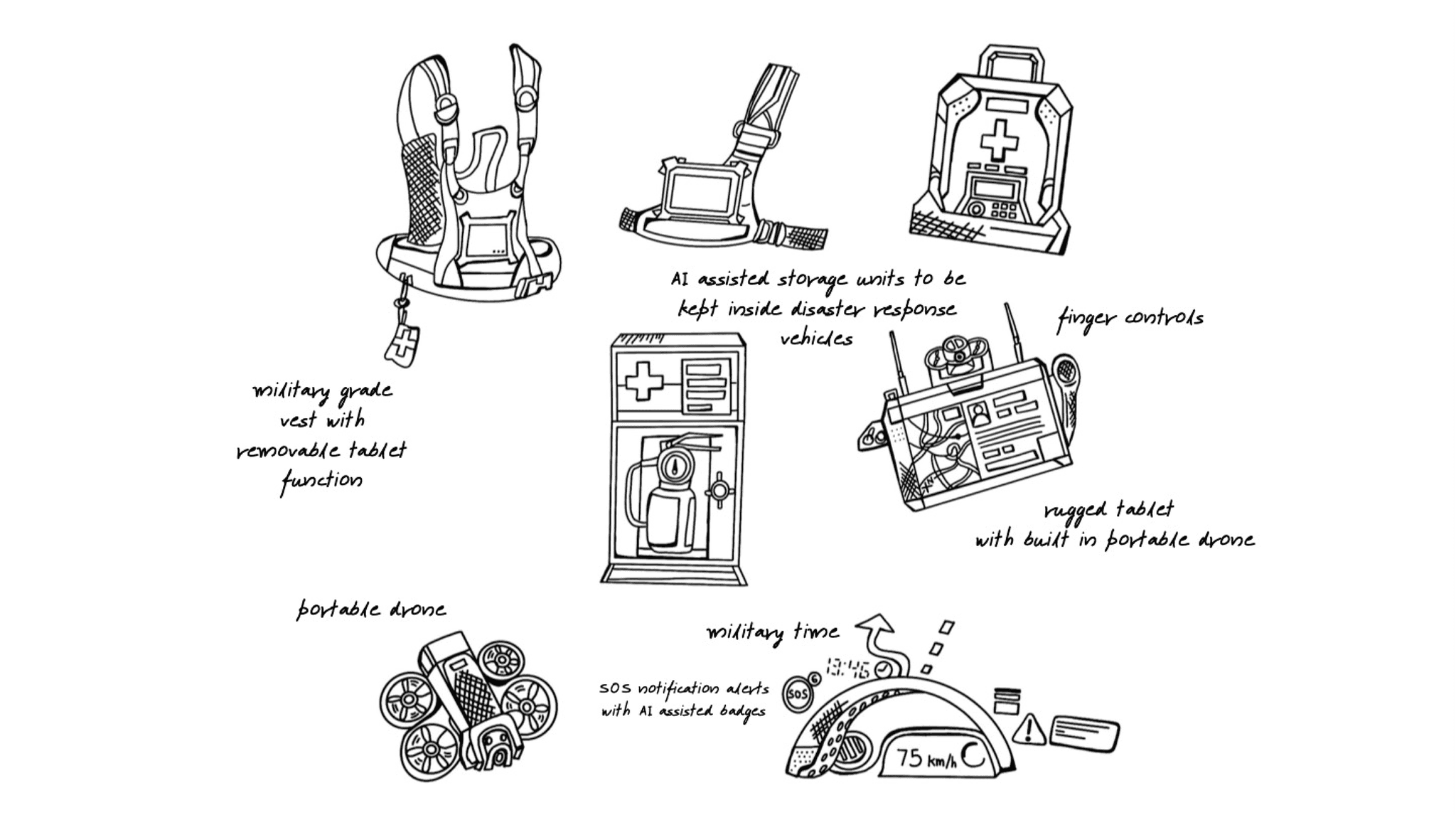
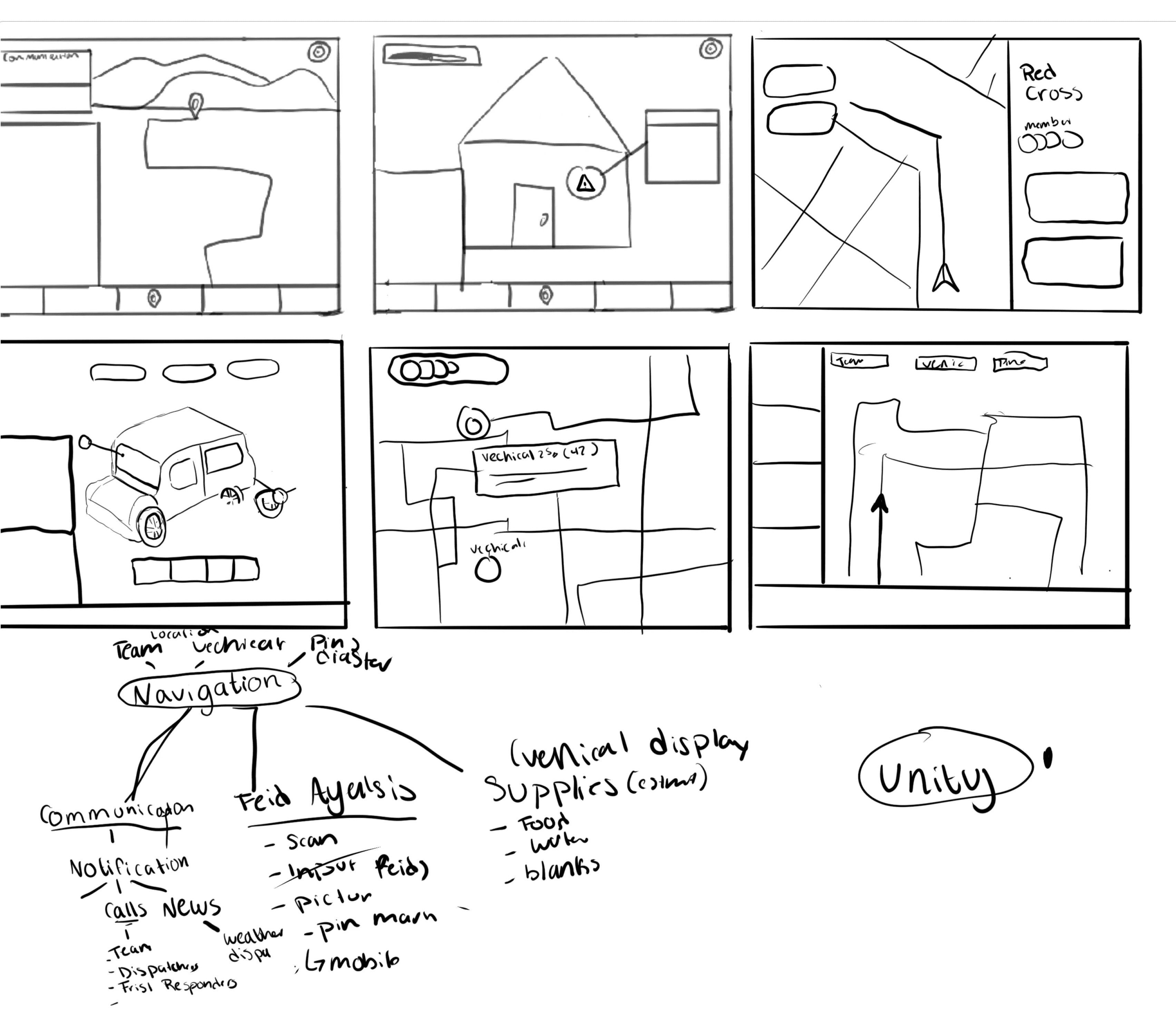
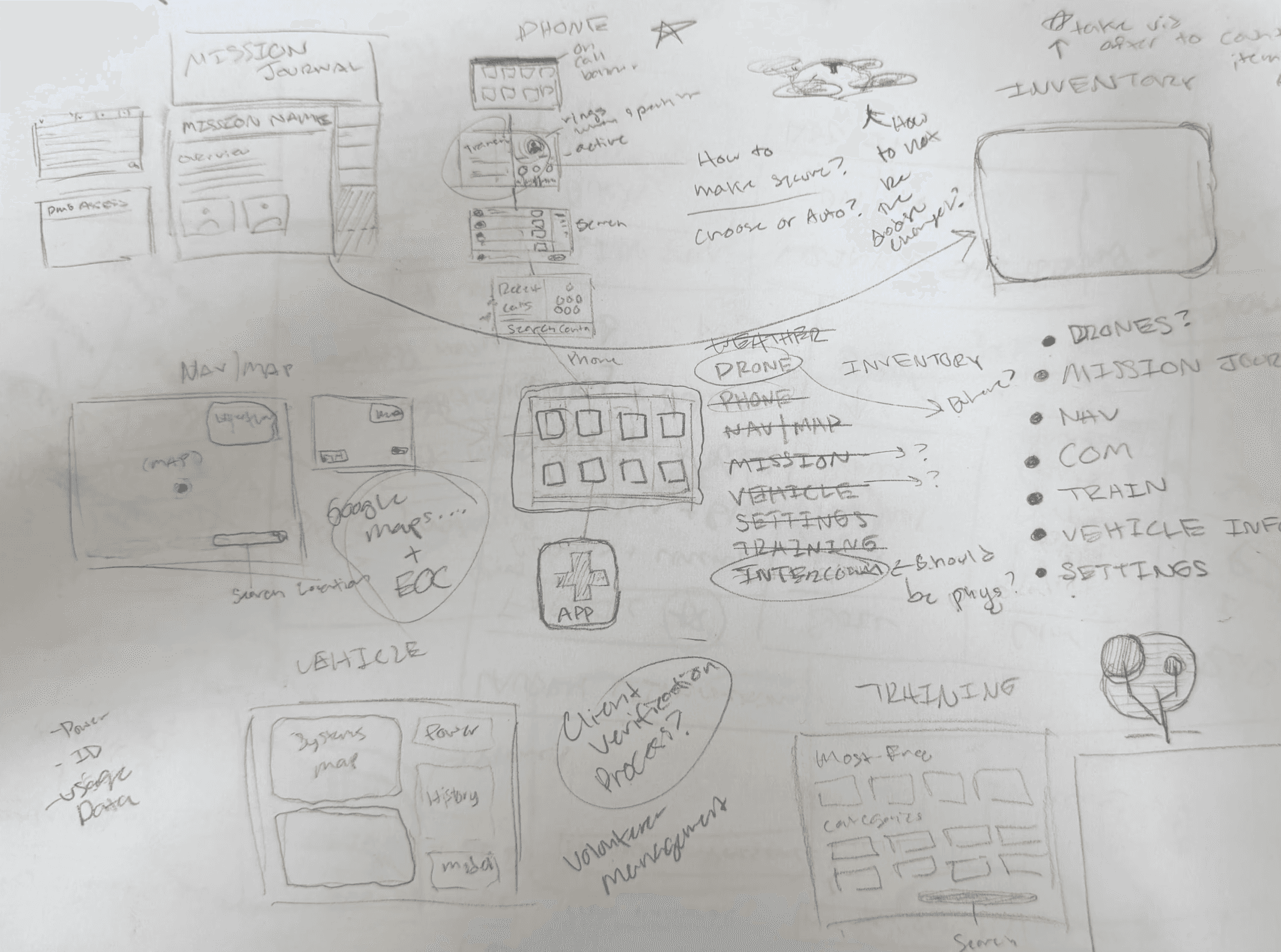
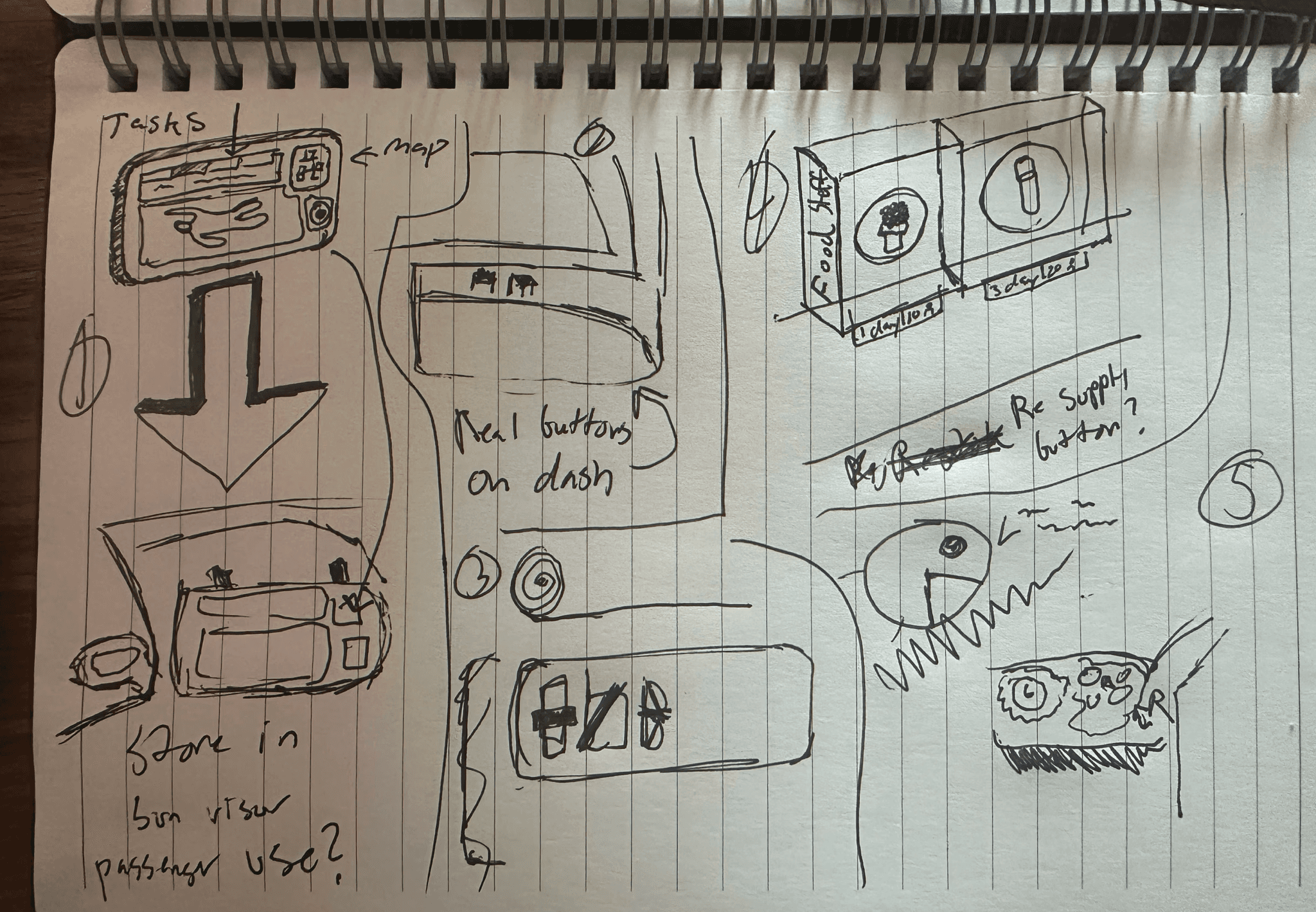
Our process combined quick sketching, divergent ideation, and interaction mapping to uncover potential directions. Crazy 8's to mid-fidelity sketching pushed us to test breadth before refining into focused prototypes.
Building a brand identity
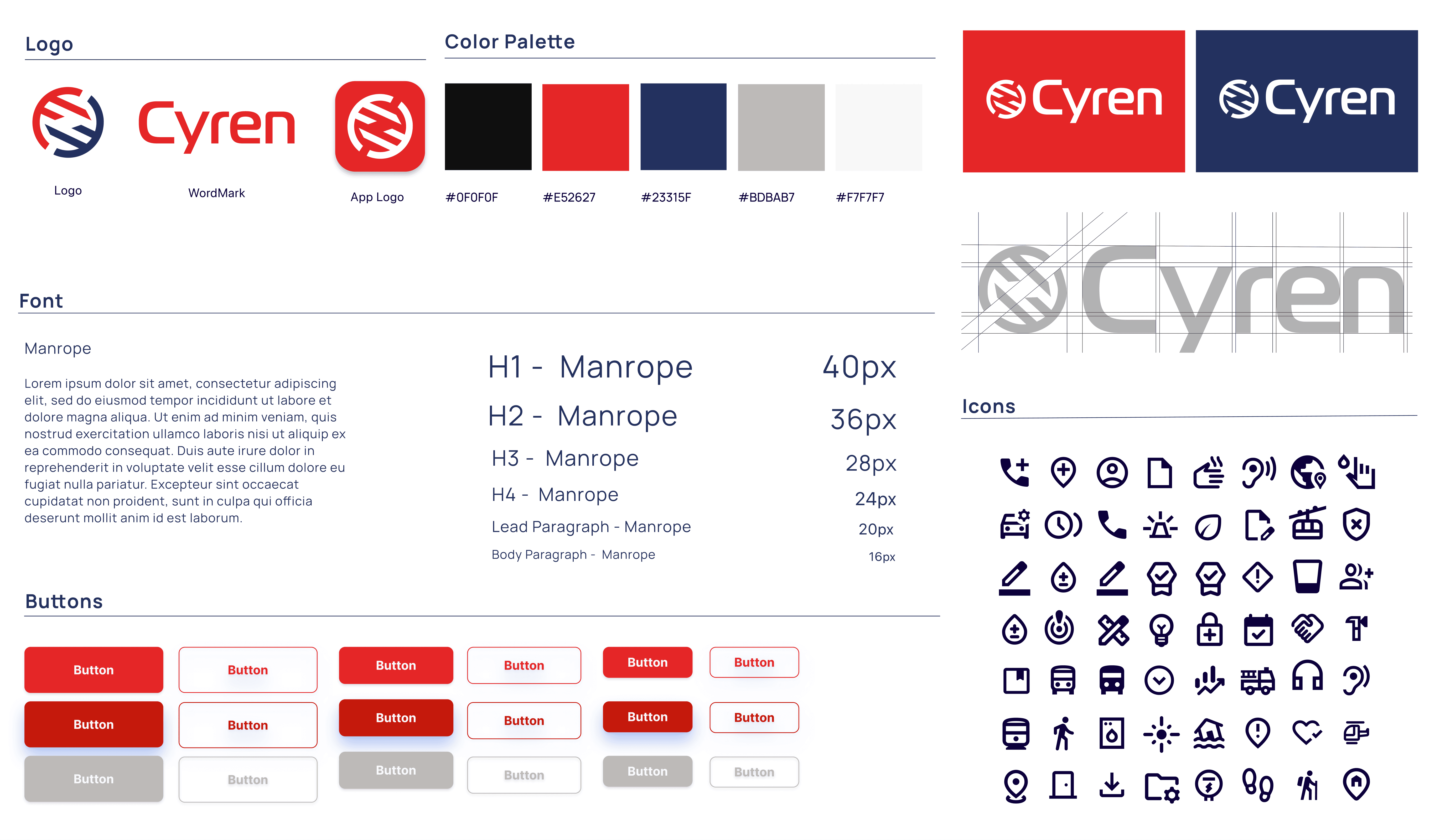
All details were intentional in branding Cyren. For instance, choosing red as one of the primary colors because it is the most visible hue in the spectrum, symbolizing urgency, visibility, and immediate action.
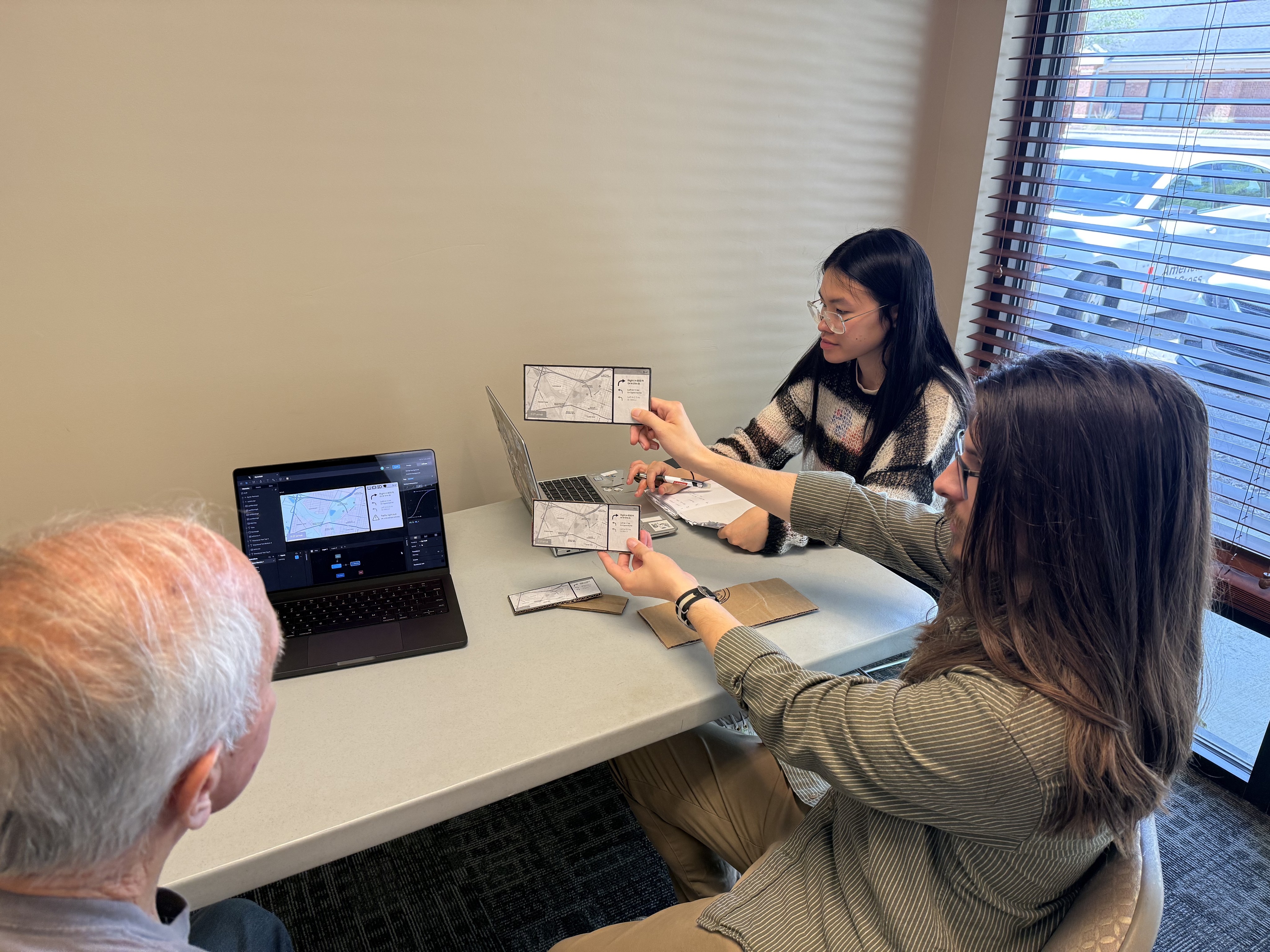
User testing and gathering data
We conducted A/B testing. heuristic evaluations, and scenario-based flow testing to validate usability and surface pain points. Insights from these sessions guided iterative refinements and informed data-driven design decisions.
Refining the challenges faced
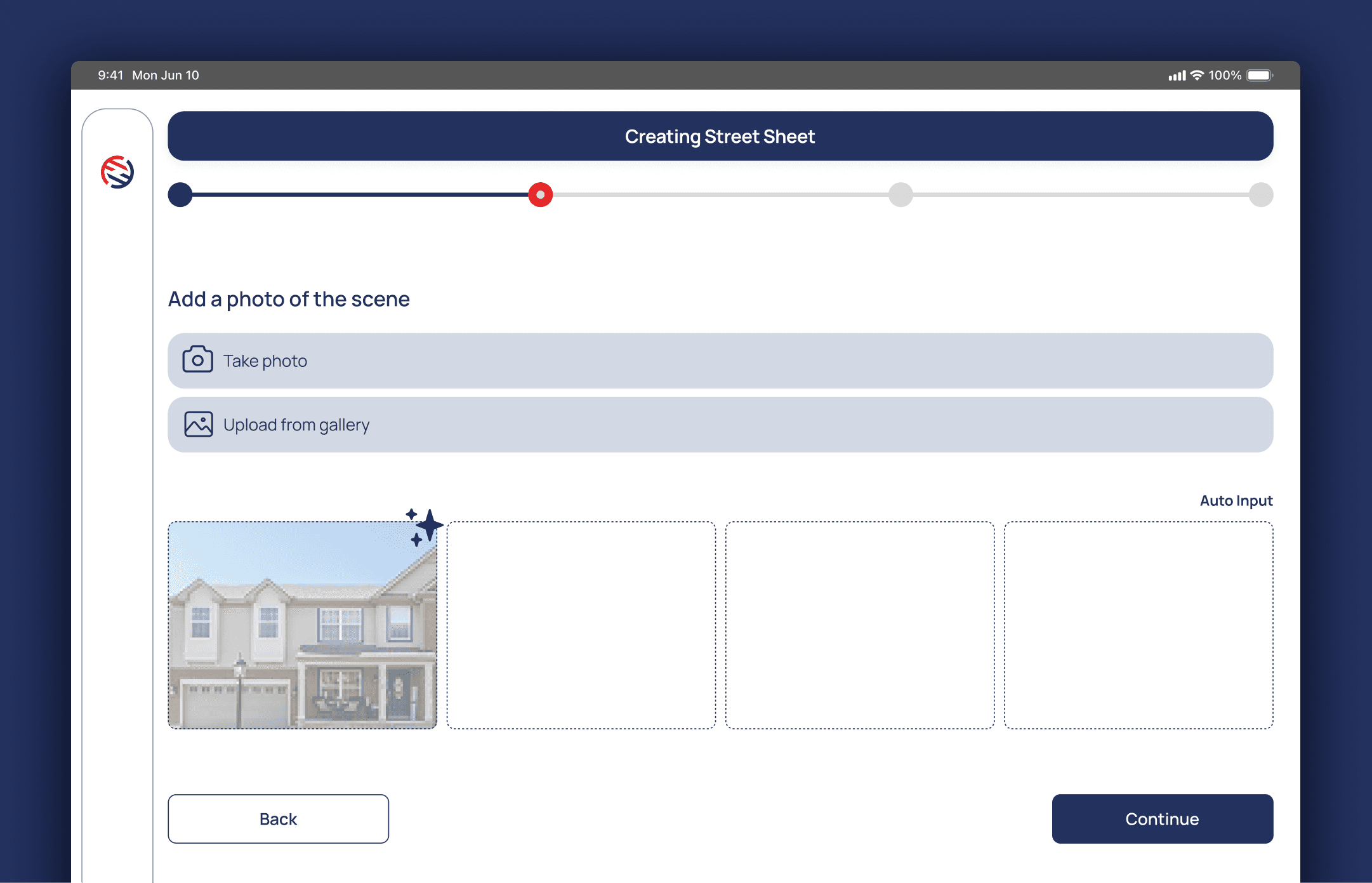
THE PROBLEM:
Red Cross relies on traditional, paper-based disaster reports on the field.
OUR SOLUTION:
A digitized disaster reporting form with smart scene assessment tags, AI-assisted auto-fill reports, and team recommendations.
THE PROBLEM:
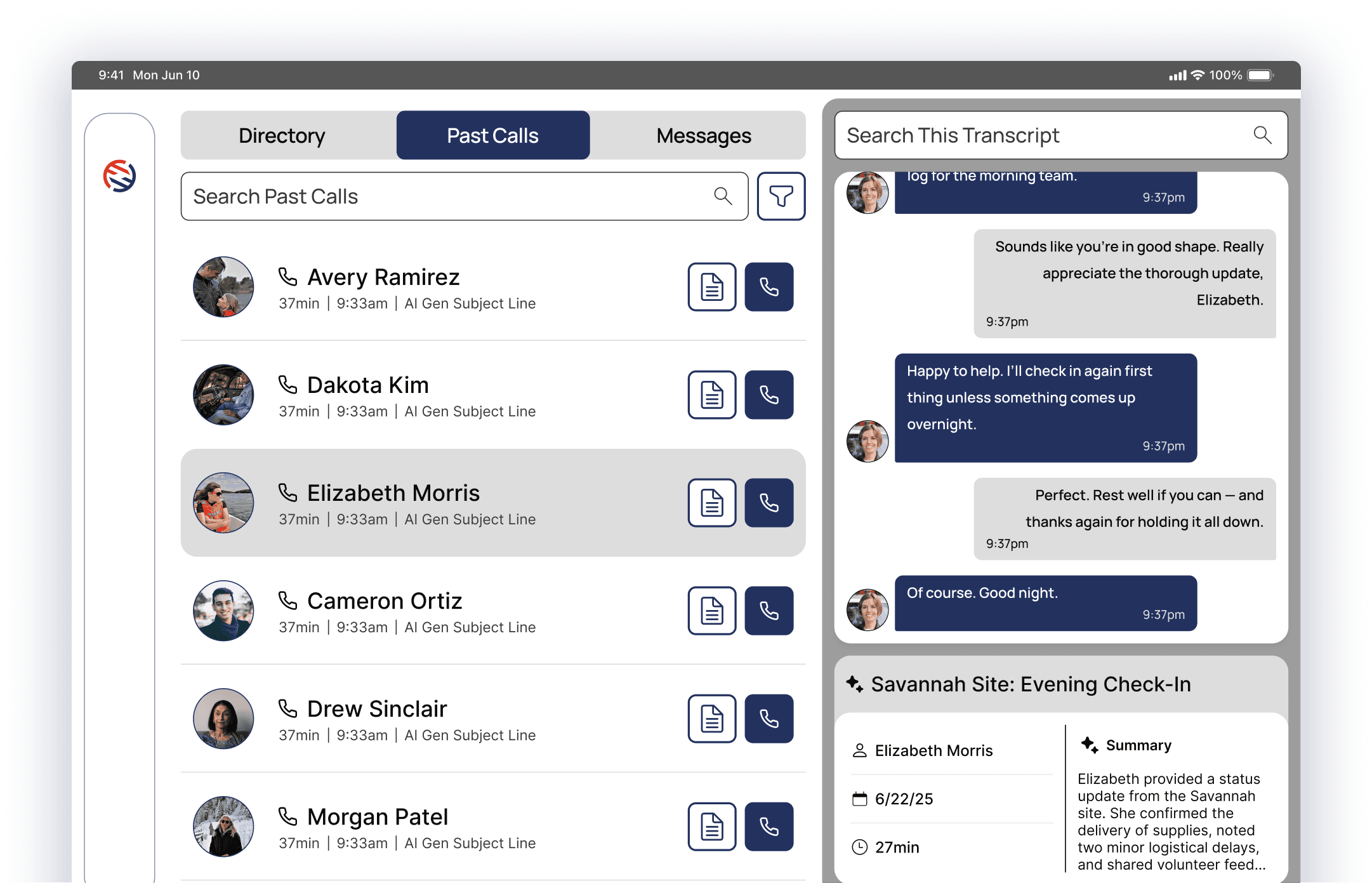
In fast-moving disaster zones, critical information gets lost in large conversations.
OUR SOLUTION:
Ensures crucial details are captured and communicated to HQ with full call transcripts and AI-driven call and chat summaries.
THE PROBLEM:
Tracking essential supplies like food, medicine, and equipment becomes a major challenge.
OUR SOLUTION:
NFC chip integration on supply kits sync directly to the app providing accurate counts.
Our solution, one unified platform for every mission
Bring relief teams, logistics, and communications together in a seamless interface designed for clarity under high-pressure environments.
Find People in Your Network
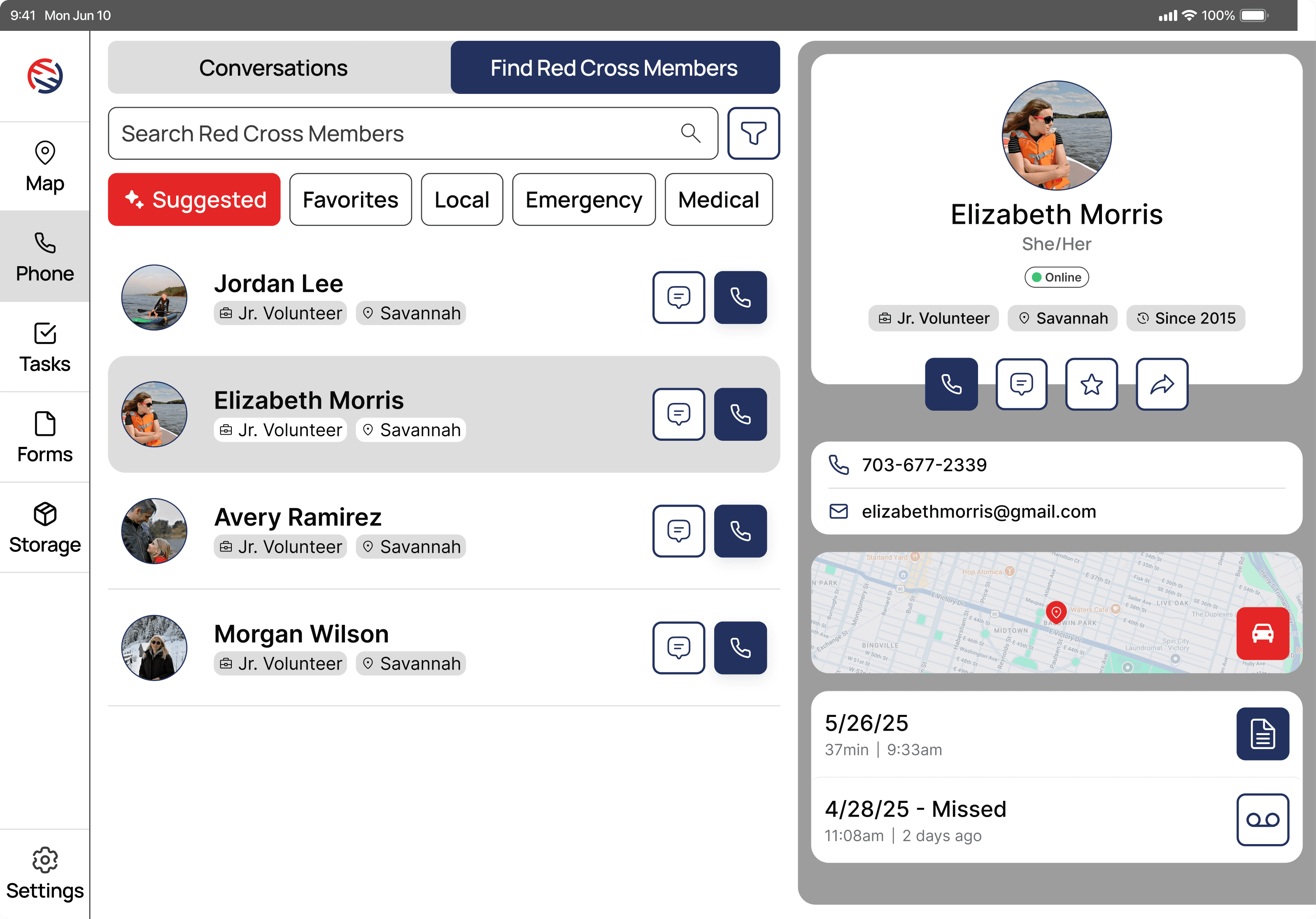
Immediately locate responders in the vicinity.
Sort by location, expertise, or role.
Establish connections via secure chat or phone interactions.
Build trusted communities for local, emergency, or medical response.
Improve collaboration by connecting right people and the right time.
Adaptive Framework
Encourages rapid decision-making as responsibilities transition between medical, rescue, and logistics.
Operations Control
Visualize progress, assign duties, and optimize relief delivery across supply chains, rescue teams, and shelters.
Insight Hub
Empower rapid action by utilizing unified maps, data, and supply records.